The Falkenseer Ring
The phone yanks Kalle out of sleep at three twenty-three. Not the duty phone — his personal one. He knows the number on the screen, even though he’s never saved it.
“Rieger.”
“Kalle. Falkenseer Platz. Shots fired at a vehicle, four arrests, one in hospital. Your patch.” The duty officer’s voice is clipped, routine, the voice of a man on his fourth coffee by half three. “But that’s not the bit that’ll interest you.”
“What then?”
“The vehicles. BMW X6, Audi RS6, Mercedes-AMG. All leased. All registered to the same shell company in Neukölln. All with matching kerb marks on the alloys — like someone parked them in sync.”
Kalle sits up, fumbles for the pack on the bedside table. “I’ll be there in twenty minutes.”
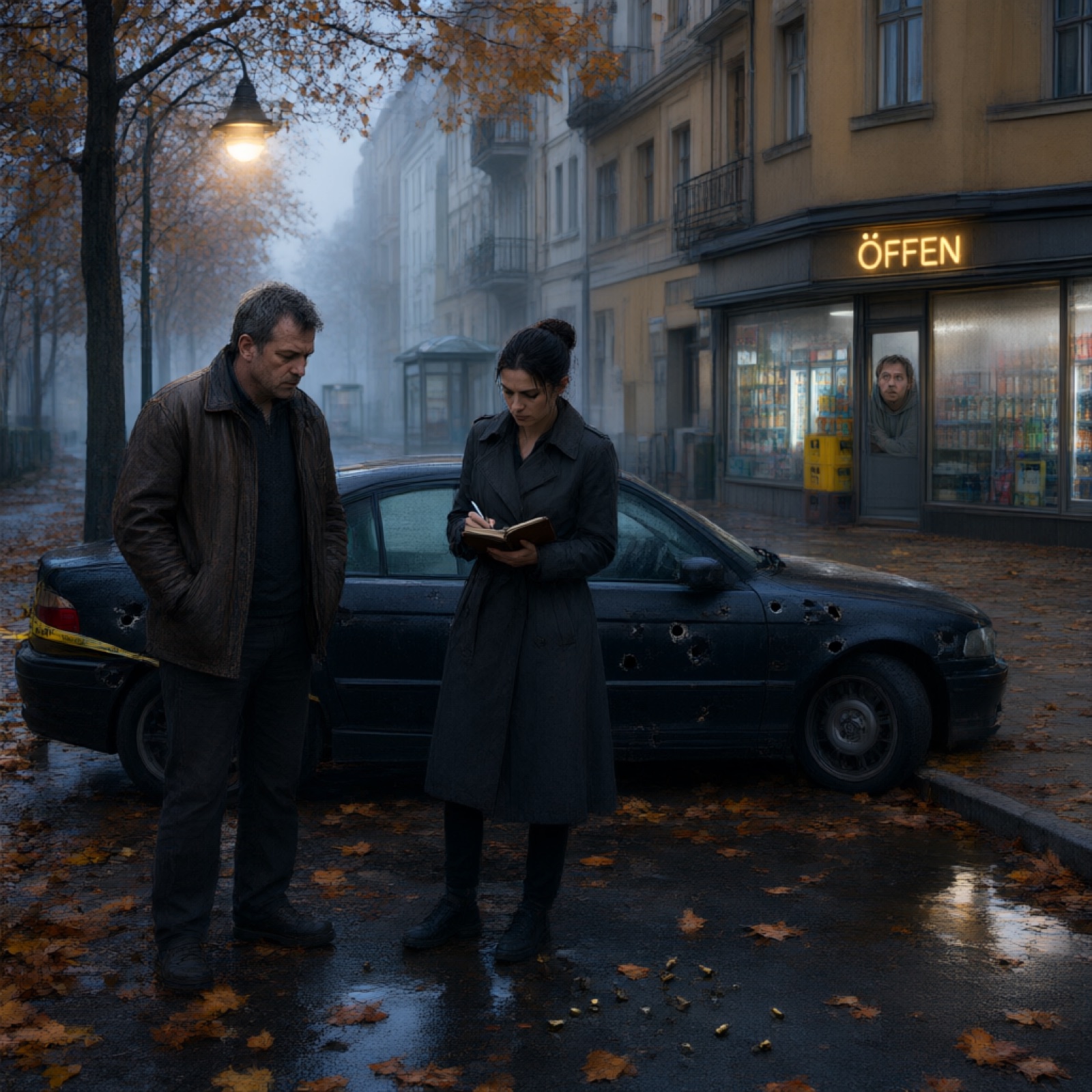
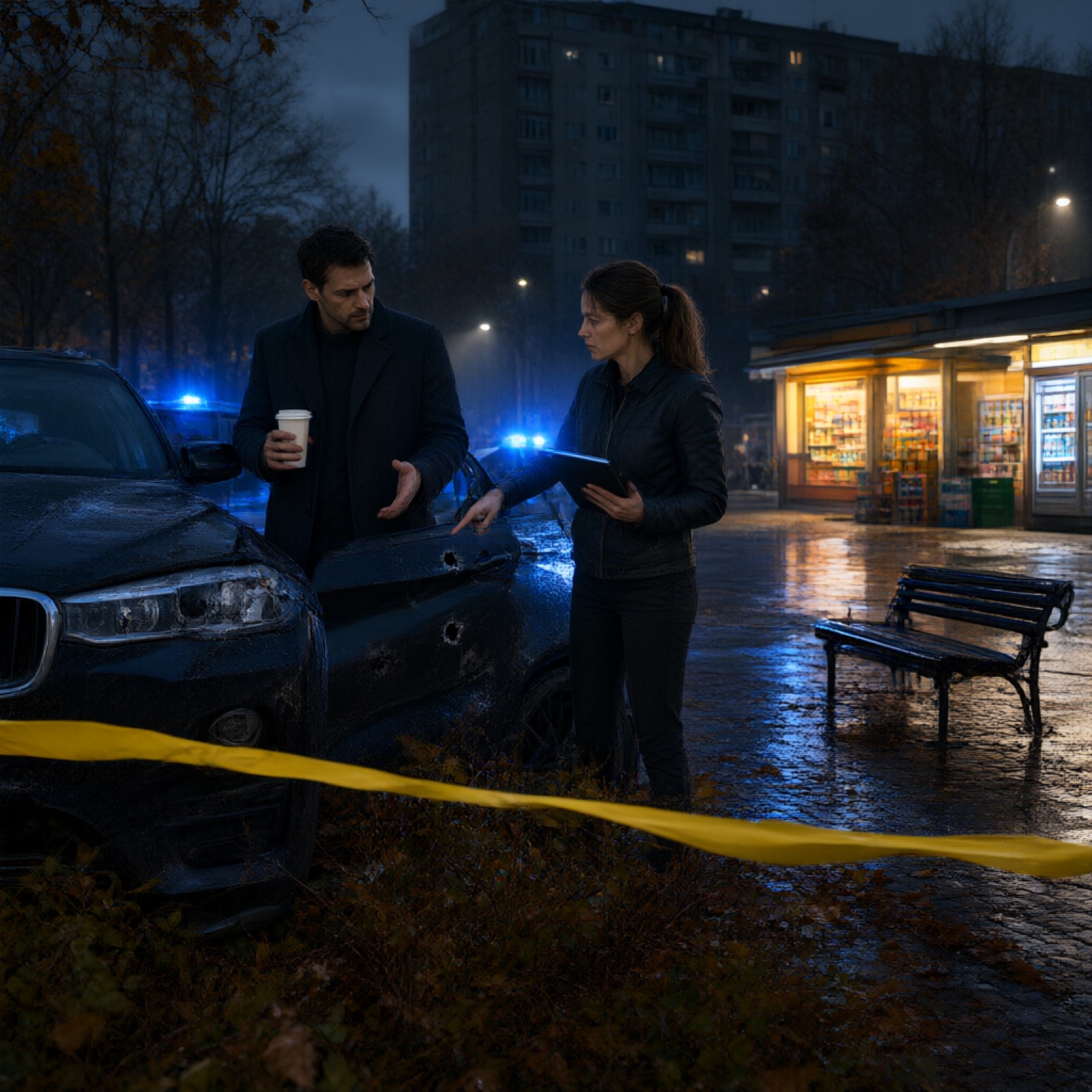
Falkenseer Platz just before four in the morning is a Berlin snapshot you won’t find in any guidebook. Three squad cars, tape flapping in the drizzle, blue lights washing the wet tarmac in cold blue-white. Between them: a BMW X6, half-buried in a bush, windscreen shattered, two bullet holes in the passenger door. Alongside it, an Audi RS6 and a Mercedes-AMG, both with doors hanging open as if the occupants couldn’t get out fast enough.
Or in.
Leni’s already there. She’s under the awning of the closed chemist’s, tablet in hand, hood pulled up against the rain. Her eyes scan the scene with the precision of a measuring instrument.
“Morning, Leni. Been up long?”
“Since two. The first call came at quarter past midnight.” She hands him a coffee — black, strong, no nonsense. “The night shift at the corner shop on the corner reported the crash before the shots were fired. Thought it was some poser pile-up.”
“But it isn’t.”
“No.” Leni turns the tablet, shows him the first crime-scene photos. “The BMW was deliberately forced off the road. Tyre tracks show the Audi and Mercedes boxed it in, then shunted it into the embankment. Then at least four people got out. One fired — three rounds. Then they kicked the BMW driver until the first siren was audible.”
Kalle takes a drag on his fag, blows smoke into the rain. “That’s no road-rage spat. That’s an execution with a warning shot.”
“Exactly. And now here’s the bit that’s keeping me awake.” Leni swipes across the tablet. “The BMW driver’s name is Dennis Kowalski, twenty-nine, trained motor mechanic, out of work for two years. No priors. But — the motor’s registered to a company called Ring Capital GmbH, Neukölln, Sonnenallee. Shell.”
“And the others?”
“Audi — Ring Capital. Mercedes — Ring Capital. All three leased, all three on the same front man — a sixty-two-year-old early retiree from Köpenick who’s never held a driving licence.”
Kalle says nothing. The pattern is clear — it’s the pattern of a money-laundering operation as common in Berlin as kebab shops and just as slippery as mercury. Leasing contracts on shell companies, the cars as mobile capital, the instalments paid from clan funds washed somewhere between betting shop, barber’s and property firm.
“Who’s the head?”
“That’s the question.” Leni scrolls further. “The four arrested — twenty-one to thirty-one, all with form, all of no fixed abode, all silent. But one of them had this in his pocket.”
She shows him a photo: a business card, black, just a name in gold lettering.
Hakan Yıldırım — Der Lenker.
“‘The Wheelman,’” Kalle says. “Like a chauffeur service.”
“Not quite. Yıldırım runs a vehicle fleet on Ruhlebener Straße. On paper: passenger transport, event service, twenty vehicles. Off the books — " Leni taps a case note. “Three investigations, all dropped. Suspicion of money laundering, document forgery, organised fraud. Nothing’s ever gone to court. The witnesses either lost their memory or relocated entirely.”
“The bloke at the wheel steers more than just cars,” Kalle says. “He steers people.”
Dawn breaks and the chemist’s is still shut when Kalle shoves open the corner shop door. Bell jangles. A lean bloke behind the counter, late forties, grey hair, eyes like a hawk. Next to the till: a photo of two lads with school satchels, a framed Chamber of Commerce certificate, a pot of tea steaming gently.
“Morning. DI Rieger. You are?”
“Erdal.” The corner shop owner clocks Kalle, then Leni, then the door, as if he’s weighing up whether to lock it. “Erdal Aksoy. I heard the shots. I called it in.”
“Did you see anything before the shots?”
Erdal hesitates. His hands, resting on the counter, are steady — too steady. “I saw the headlights. Three cars. Came across the square doing at least fifty. Like one was on the run and the others in pursuit.”
“But?”
“But nothing.” Erdal’s voice firms up, almost defiant. “I’ve got no names. I’ve got no faces. I only saw what anyone would have seen.”
Kalle leans against the counter. He knows this tone. It’s the tone of a man who knows exactly who did what — and exactly what it’ll cost him to say so.
“Erdal. I’ll make you a deal. You tell me who drives those cars. I won’t tell anyone where I got it. You stay out of all of it — no case-file mention, no witness status, no summons.”
Erdal is silent. The tea steams. The clock on the wall ticks — loud, old-fashioned, each second an accusation.
“Hakan,” he says at last. The word drops like a stone.
“Hakan Yıldırım.”
Erdal nods, once, short. “He’s got an office on Seegefelder Straße. Vehicle fleet on paper. But there’s no taxis in there, Inspector. There’s AMGs. All leased. All registered to people who’ll never sit in them.”
“And why are you telling me this now?”
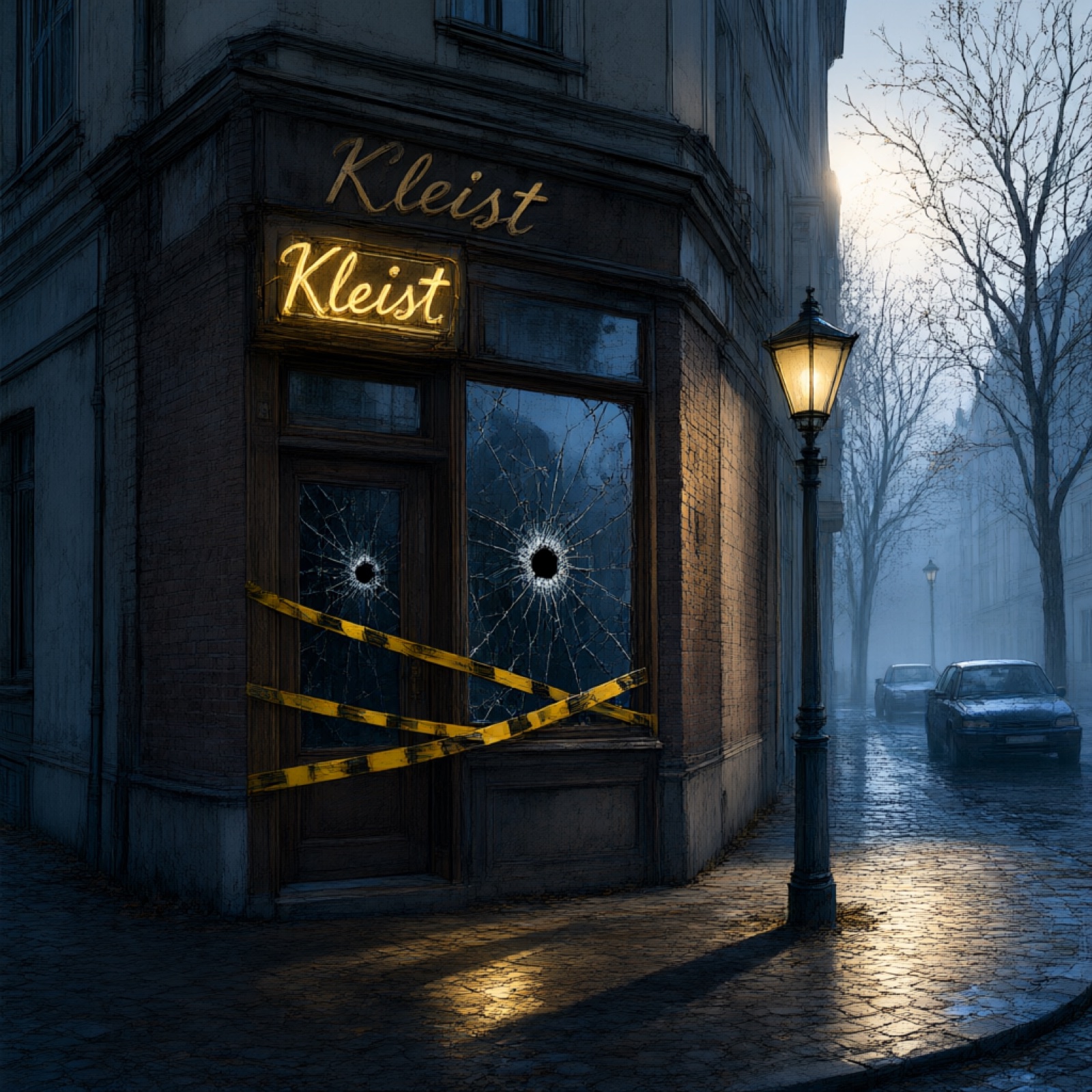
Erdal looks at the photo next to the till. The two lads with the school satchels. “Because my sons walk to the bus stop here every morning. And because last night the bullets hit the letterbox of the chemist’s opposite, two metres from the shelter.”
Leni photographs the bullet holes in the chemist’s façade. Kalle stubs out his fag, this time on his own shoe sole.
The corner shop owner says nothing more. Kalle leaves him his card. “If anything comes up, Erdal. Day or night.”
The doorbell jangles goodbye.
Half an hour later they’re sat in Kalle’s motor, third coffee, second shift. Rain drums on the roof and Leni’s got the laptop open, screen mirrored in the windscreen.
“Right then. Hakan Yıldırım, forty-one. Born in Berlin-Spandau, Turkish parents, second-generation car-parts wholesaler. On paper: fleet operator, twenty vehicles, seven employees, spotless tax record. Off the books — " she scrolls through the file, " — three dropped investigations, four suspicious property purchases in Spandau and Charlottenburg, two links to a betting-shop network that filed for insolvency over the last two years, and a brother-in-law who does the books for an Abou-Chaker clan offshoot.”
“Family firm,” Kalle says. “And the money laundering?”
“That’s the clever bit. Yıldırım leases vehicles to shell companies. The leasing payments are serviced from clan funds — but the instalments flow through legitimate bank accounts. The cars are the wash cycle: clean money in, clean leasing payment out, and on the side a dozen young men are driving AMGs none of them could ever afford. In return they do whatever the Wheelman says.”
“Like forcing a BMW off the road and shooting the driver.”
“Exactly. The question is: why Kowalski? The bloke’s unemployed, no priors, no clan ties, no debts — at least not on paper.”
Kalle stares into the rain. The wipers squeak, once, twice. “The key isn’t Kowalski himself. The key is what the motor was carrying.”
By half seven Forensics are done with the BMW. The car sits half in the bushes, doors open, a strip of yellow tape fluttering round the wing mirrors like a flag no-one’s hoisted. Crime scene have made the usual finds — shell casings, fingerprints, a mobile that had slipped under the driver’s seat. But the interesting bit is in the boot.
“Kalle.” Leni waves him over. “Look at this.”
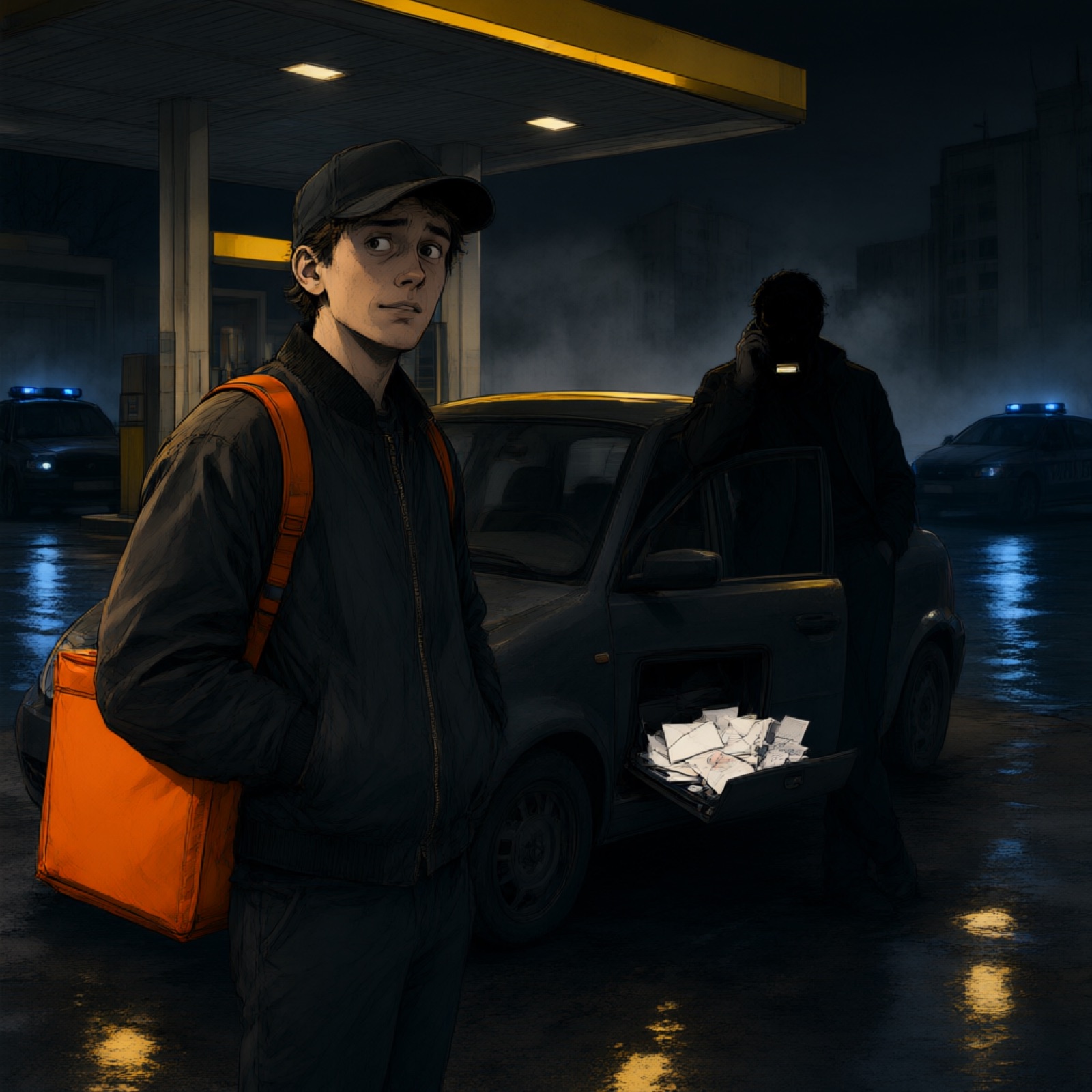
She’s opened up the false floor — a custom-built recess lined with felt, the kind that doesn’t exist on any factory-spec BMW. And inside: a sealed envelope, a stack of bank statements and a tablet.
Kalle pulls on latex gloves and picks up the tablet. The screen lights up, no lock. A password would’ve been pointless — whoever knew about the hiding place was never planning to leave the car.
On the display: an Excel spreadsheet. Columns of number plates, leasing contracts, repayment instalments. Alongside: names, addresses, sums of money. And right at the bottom, in a separate column, a single word: Levy.
“That’s the books,” Kalle says. “Kowalski was the bookkeeper.”
“An unemployed car mechanic as bookkeeper?”
“An unemployed car mechanic who can read payroll and has no priors. Perfect for a front man who doesn’t draw attention.” Kalle scrolls further. “The leasing payments come from Ring Capital. The repayments go to three banks in Berlin, Hamburg and Frankfurt. And the Levy column — that’s the monthly payments to Yıldırım personally. Commission. Hire purchase. Call it what you like.”
Leni zooms in on one of the addresses. “That betting shop on Klosterstraße. That’s one of the insolvent ones. And the recipient of the levy — that’s Yıldırım’s brother-in-law.”
“Family firm,” Kalle repeats. “With bookkeeping that’d make a tax accountant green with envy. But why the shooting? If Kowalski was the bookkeeper — why liquidate your own bookkeeping?”
“Maybe he didn’t want to be it any more.” Leni opens the bank statements. “These are private transfers. Kowalski’s transferred forty thousand euros to a Cyprus account over the last three months. Always small amounts, below the reporting threshold. He was skimming.”
“Skimming his own operation’s cash?”
“Not quite. Look at the last transfer.” She points to the final statement: Reference: loan repayment. Recipient: Ring Capital GmbH. “He was trying to buy back his shares. Buy his way out of Yıldırım’s system.”
“And Yıldırım clocked it.” Kalle shuts the tablet. “The Wheelman sent four men after him. Not to arrest him — to show him no-one leaves the Ring.”
The picture fills in over the course of the morning. The four arrested are in custody, all refusing to talk, all with the same solicitor — a Charlottenburg firm specialising in organised crime, though that’s not what it says on the letterhead. Kowalski is in hospital, stable fractures, no danger to life, but he’s not talking. Not yet.
Kalle and Leni stand outside Yıldırım’s depot on Seegefelder Straße. It’s an unprepossessing building — flat roof, corrugated-iron gate, the company sign understated, almost modest. But behind the gate, through the gap in the fence, the sun catches the gleam of twenty polished bonnets.
“What d’you reckon, Leni? Shall we?”
“The warrant’s not through yet. The CPS are still reviewing.”
“Then let’s ring the bell for a private chat.”
Yıldırım answers the door himself. A lean man, well-groomed, close-cropped hair, white shirt, cuffs buttoned. He doesn’t look like a criminal — he looks like the managing director of a mid-sized firm who’s about to step out for his second espresso.
“DI Rieger. DS Weber. Please.” He steps aside as if he’d been expecting them.
The office is tidy, tasteful — a large walnut desk, family photos on the wall, a display cabinet full of model cars. Everything breathes legality, everything breathes money. But Kalle can feel something vibrating beneath the surface — a tension that Yıldırım masks with professional courtesy.
“You know why we’re here,” Kalle says.
“I heard about the shooting. Terrible. I hope the driver pulls through.” Yıldırım’s voice is calm, smooth, schooled.
“The three vehicles — BMW, Audi, Mercedes — are registered to your company.”
“Ring Capital. Yes, I’ve heard about that. But I’m not Ring Capital, Inspector. I run a vehicle fleet. My clients are event organisers, wedding parties, film productions. Ring Capital is a leasing provider I occasionally do business with — nothing more.”
“And Dennis Kowalski? The BMW driver?”
Yıldırım doesn’t blink. “Never heard of him.”
Kalle puts the tablet on the desk. The Excel spreadsheet glows, the columns, the names, the Levy. “This is Ring Capital’s bookkeeping. Found in the boot of the BMW.”
Yıldırım glances at it. His expression remains unmoved — but his right hand, resting on the armrest, tenses for half a second. Kalle clocks it. Leni clocks it.
“Interesting. But what does that have to do with me?”
“The monthly levy,” Leni says. “It goes to an account belonging to your brother-in-law. A betting shop on Klosterstraße. The same betting shop that filed for insolvency two years ago and whose bookkeeping has been — how shall I put it — creatively continued ever since.”
This time Yıldırım flinches. Minuscule. Barely visible. But there.
“My brother-in-law is self-employed. I don’t know what he does. We’re not business partners.”
“No?” Kalle pulls a second printout from his pocket — the bank statements, the transfers, the connections. “Then explain to me why the leasing payments for the BMW, the Audi and the Mercedes all run through the same bank account as your depot rent. Coincidence?”
Yıldırım is silent. The air conditioning hums. Outside you can hear the traffic on Seegefelder Straße, a bus hissing to a stop, a horn sounding, brief.
“You know, Inspector,” he says at last, and his voice is still smooth, still controlled, but there’s steel beneath the smoothness now, “in my business flexibility is everything. You lease cars, sub-lease them, find partners, part ways again. What was clean yesterday can be — problematic today. I’d advise you not to focus too hard on what you think constitutes evidence.”
“Is that a threat, Mr Yıldırım?”
“A recommendation.” Yıldırım stands up, buttons his jacket. “And now, if you’ll excuse me. I have an appointment.”
Kalle doesn’t stand up. “Mr Yıldırım. Your four drivers tried to murder Dennis Kowalski last night. They forced him off the road, shot at his car, kicked him while he was on the ground. The man’s in hospital — and you’re sat here with pressed cuffs telling me about flexibility.” Kalle leans forward. “I’ve got the bank statements. I’ve got the bookkeeping. I’ve got witnesses who saw your motors tear across Falkenseer Platz doing fifty. And I’ve got a witness who saw everything.”
“Which witness?” That came too quickly. Too sharp.
“Frau Lehmann from the ‘Ruhe am Ring’ residents’ initiative. She watched the whole chase from her window.” Kalle says it calmly, casually, as if it were a given. In truth they don’t yet know whether Frau Lehmann actually saw anything — the call from the initiative came ten minutes ago, she wanted to come forward, but the sighting hasn’t been confirmed.
But Yıldırım doesn’t know that. His jaw works. His knuckles on the desktop are white.
“That’s enough,” he says. “I want to speak to my solicitor.”
“Right you are.” Kalle stands, this time smiling. “You do that. But know what, Mr Yıldırım? Your system is good. Your bookkeeping is clean. Your solicitors are expensive. But that Ring you built — it’s got a hole in it. And we’ll get you through that hole.”
On the way back to the car Leni’s phone rings. It’s Frau Lehmann, the witness from the initiative. She really did see everything: the chase, the shots, the men kicking the BMW driver. And she’s got video.
It’s a grainy phone video shot in night mode, but the number plates are legible, the silhouettes of the attackers are identifiable, and the ringleader’s voice — “The bastard skipped out of the Ring!” — is crystal clear.
“Ring,” Kalle says, and for the first time that morning he properly smiles. “The man shopped himself.”
Two hours later the search warrant is on the table. The raid on the depot begins at half two in the afternoon. Kalle and Leni lead the operation, but the real work’s being done by the tax authorities — Ring Capital’s accounts are frozen, the leasing contracts are under review, and Yıldırım sits in an interview room, solicitor at his side, jacket still immaculate.
Kalle watches him through the glass. A man who’s pulled the strings his entire life. Never fired a shot himself, never kicked a man on the ground, never broken the law — only got others to do it for him. The Wheelman.
“Think we’ll get him?” Leni stands beside him, coffee in hand.
“In court? Hard to say. The bloke’s survived three dropped investigations.” Kalle sips his own coffee. “But his system’s dead. The accounts are frozen, the depot lease contracts have been terminated, the four shooters are starting to talk — one’s already offered to turn Queen’s evidence. And Kowalski? He’ll pull through. Lucky. Another few centimetres and the round would’ve hit the carotid.”
“And the Ring?”
Kalle stares at the interview room. Through the glass he can see Yıldırım whispering something to his solicitor, calm, controlled, as if he were discussing a delivery route.
“The Ring’s broken,” Kalle says. “The Wheelman’s turned his last wheel.”
Note: All persons, places and events in this story are fictional. It was inspired by a public police report but does not depict real events, persons or situations. Further information: Legal Notice.