The Staaken Shot
The call comes at half nine in the morning, and Kalle still hasn’t got through his second coffee. The first sits cold on his desk, next to half a sandwich Leni put there twenty minutes ago with a note: “Eat. You’ll need it.”
She’s right. As usual.
“Rieger.”
“Kalle. Spandau. Staaken. Someone’s ruined a parked BMW’s night. Bullet holes. BAO Ferrum’s already taken over, but the senior officer wants us to have a look anyway.”
“BAO Ferrum? Clan stuff?”
“That’s it. Twenty-two-year-old owner, not exactly a blank page. Uncle’s in Tegel, cousins spread across three continents. You know how it goes.”
Kalle picks up the cold coffee, downs it in one. “I’ll get Leni. Be there in thirty minutes.”
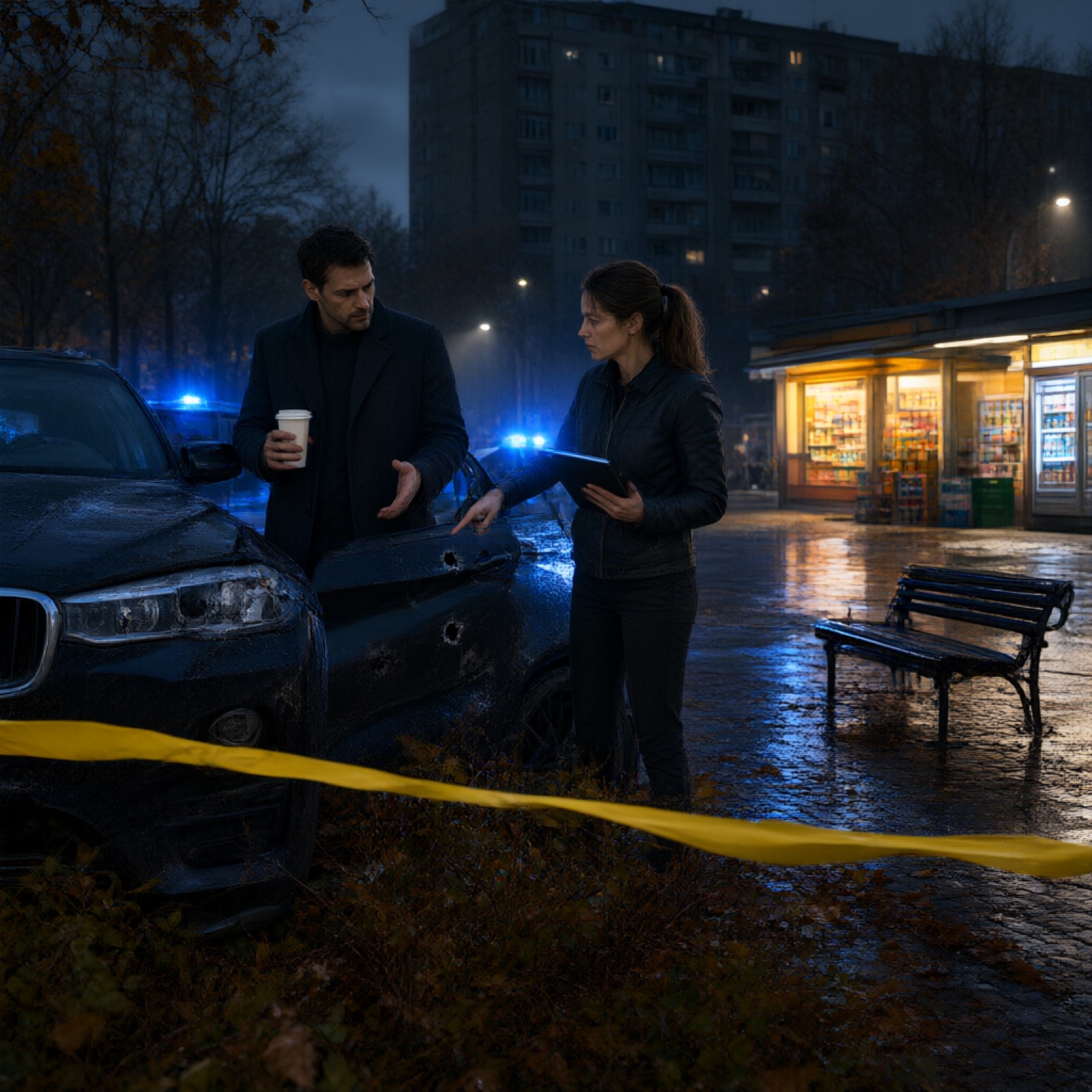
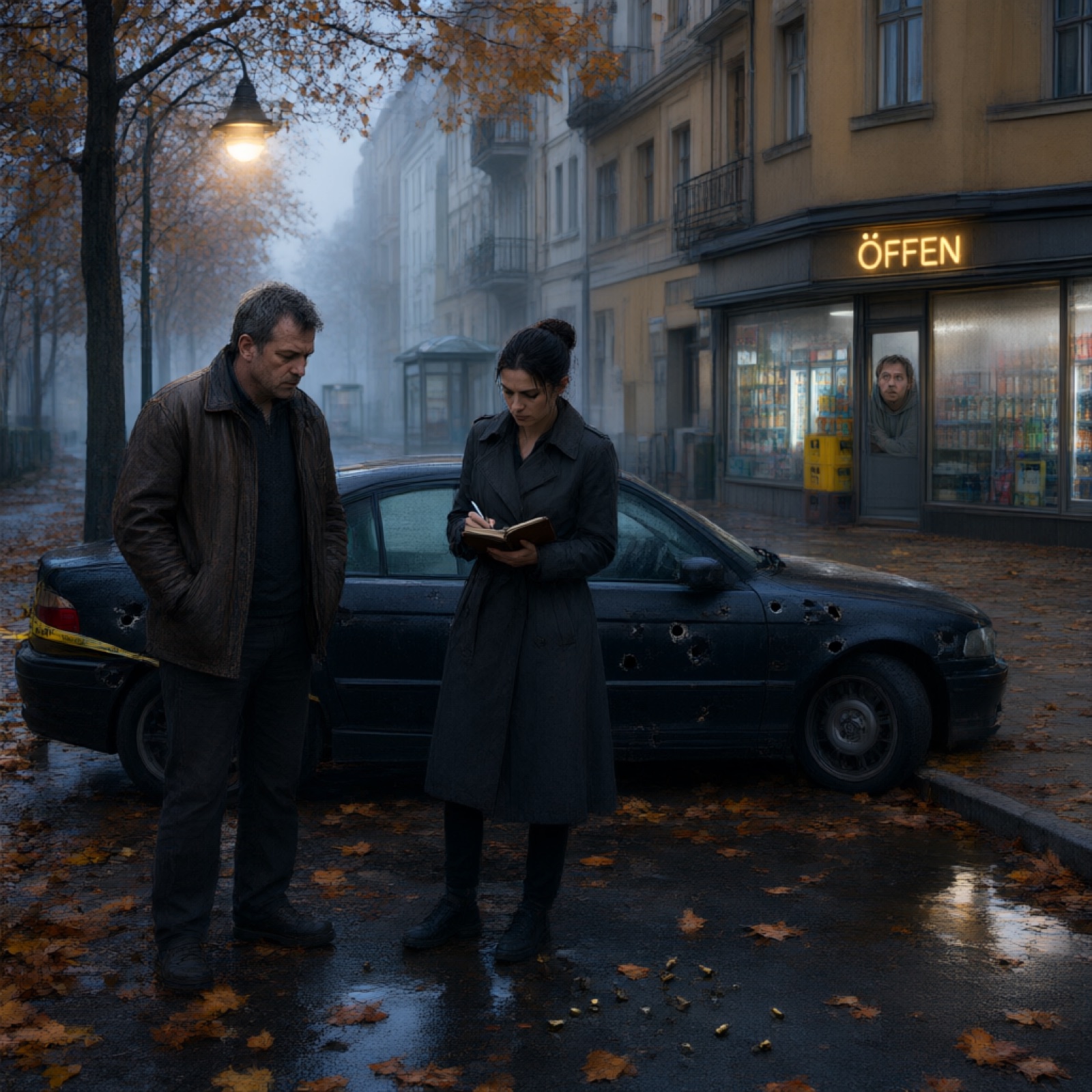
Staaken is one of those Berlin districts that pretends it’s somewhere else. Quiet, a little too quiet for an autumn morning where someone’s put holes in a car. Detached houses with neat front gardens, a bus stop, a letterbox. And in front of it: a metallic-blue BMW 3 Series, passenger side facing the pavement, three bullet holes neatly grouped in the rear door. No shattered glass, no bloodstains. A message, not an attack.
Kalle parks fifty metres from the cordon. Leni gets out without a word, walks once around the BMW, stops in front of the bullet holes. Then she crouches down, studies the tyres.
“Who shoots at a parked car?” she asks, more to herself.
“Someone who knows the owner’s in bed at this time of day. Or someone who wants to tell the owner something.”
“Or someone who got the wrong car.”
Kalle raises an eyebrow. “Wrong car? In Staaken? Everyone round here knows every car. The corner-shop bloke knows when the postman lifts his leg.”
“Exactly.” Leni straightens up. “Three shots, all into the bodywork, no glass, no body damage apart from the holes. That’s precision. Whoever did this wasn’t nervous.”
A uniformed officer comes over, hands Kalle a clipboard. “Registered keeper is a Dennis Marquart, twenty-two, living on Heerstraße. Parked the car here last night around ten, walked home. Half eight this morning he was heading to work — that’s when he saw the holes.”
“Work?” Kalle flips the page. “What’s the lad do?”
“Qualified freight forwarding clerk. Works at Riga-Baltic-Logistics on Brunsbütteler Chaussee.”
Kalle and Leni exchange a look. Riga-Baltic-Logistics. The name had shown up in four BAO Ferrum files over the last three months, every time in connection with shipping documents that didn’t quite describe what was actually in the containers. The problem: Riga is EU, Schengen, free movement of goods. Hard to pin down, easy to wash clean.
“And the uncle?” Kalle asks.
“Dennis Marquart, forty-nine. Four years in Tegel, gang-related fraud. Release in eight months. The lad — the nephew — has no priors. Not even a traffic offence.”
“Not yet,” Kalle says.
The corner shop on the junction is called “Schlehenweg Snacks & Off-Licence” and it’s exactly the kind of place you only still find in Berlin because the owners are too stubborn to give up. Flickering neon light, a fridge humming like a pneumatic drill, and behind the counter a man who looks like he hasn’t slept for ten years.
Witalij — that’s what it says on the handwritten sign by the till — sizes up Kalle and Leni with the weariness of someone who knows two detectives don’t want coffee at ten in the morning.
“Morning,” Leni says, and it actually sounds friendly. “You seen the BMW out front?”
Witalij shrugs. “I see a lot of cars.”
“At ten in the evening?”
Another shrug. “Maybe. Maybe not. I close at ten.”
Kalle steps up next to Leni, rests a hand on the counter. Not threatening, but close enough that Witalij feels the difference. “Witalij — I’m just going to call you that — the lad who owns the BMW, he’s never caused any bother. No trouble with neighbours, no trouble with girls, no trouble with anything. But his uncle’s in Tegel. And now someone’s put three holes in his motor. Who shoots at cars in Staaken?”
Witalij says nothing. His hand, resting on the worn wooden counter, doesn’t tremble. But his eyes shift briefly to the door, and Kalle knows it’s not the cold that’s making him shiver.
“I didn’t see anything,” Witalij says. Then, quieter: “But I heard something. Around midnight. A car going too fast for this street. And then — three times. Not like firecrackers. Drier. Like a hammer hitting concrete.”
“What kind of car?” Leni asks.
“Not a sports car. Something heavier. Diesel. Might’ve been a van.”
Kalle writes nothing down. He just remembers it. “And the lad — this Dennis — you ever deal with him?”
Witalij’s gaze hardens. Not hostile, but careful. Like someone opening a door just a crack, because they know what’s lurking behind it. “The lad used to come in now and then for a pack of fags. Marlboro Gold. Nice kid. Never done anything wrong.”
“But?”
“No but. I saw nothing, I heard nothing. I just heard a van going too fast and three bangs that weren’t fireworks. Anything else — ask the lad himself.”
The BAO Ferrum office is on the fourth floor of Police Headquarters at Platz der Luftbrücke. Long corridor, humming fluorescent tubes, doors that are never quite shut because behind them someone’s always on the phone, labelling maps or drinking coffee out of paper cups.
Detective Superintendent Schneeweiß — yes, that’s really his name, and no, he can’t laugh about it — is waiting in a meeting room that looks more like a storage depot. Boxes of evidence piled against the walls, a whiteboard landscape that looks like a parallel-universe tube map.
“Rieger. Weber.” Schneeweiß addresses them by surname, that’s his style. “Sit down. Or don’t. Makes no difference to me. But listen.”
He slides two photos across the table: a man, mid-forties, broad face, hair short and neatly parted like a bank clerk’s. But the eyes — the eyes belong to a man who knows what the inside of a mincer looks like.
“Mirko Kovač. Nickname: The Knife. Croat, born in Riga, Latvian passport. Officially: dispatcher at Riga-Baltic-Logistics, Berlin branch. Unofficially: enforcer for the Latvian logistics clan that’s been infiltrating the Spandau leasing market for two years. We’ve got him on twenty-seven files, but nothing that’ll hold up in court. The witnesses — the few we had — either lost their memory or moved to Vilnius.”
Kalle studies the photo. “And what’s he got to do with a shot-up BMW in Staaken?”
“Maybe nothing,” Schneeweiß says. “Maybe everything. The BMW isn’t a coincidence. The nephew — Dennis Marquart — has been working for Riga-Baltic for six months. He’s got access to the Berlin branch’s shipping documents. And three weeks ago he filed an internal compliance report. Something about irregularities in the declaration of car parts from Riga. The report went straight to the Latvian head office — not to the Berlin dispatcher, who happens to be Kovač.”
Leni picks up the second photo, a CCTV still from an industrial estate: vans, forklifts, men in hi-vis vests. “You think the lad grassed on Kovač?”
“I think,” Schneeweiß says, taking his glasses off for the first time, “Kovač sent the lad a message: compliance is unhealthy. And the question isn’t whether the next step is a second message — it’s when.”
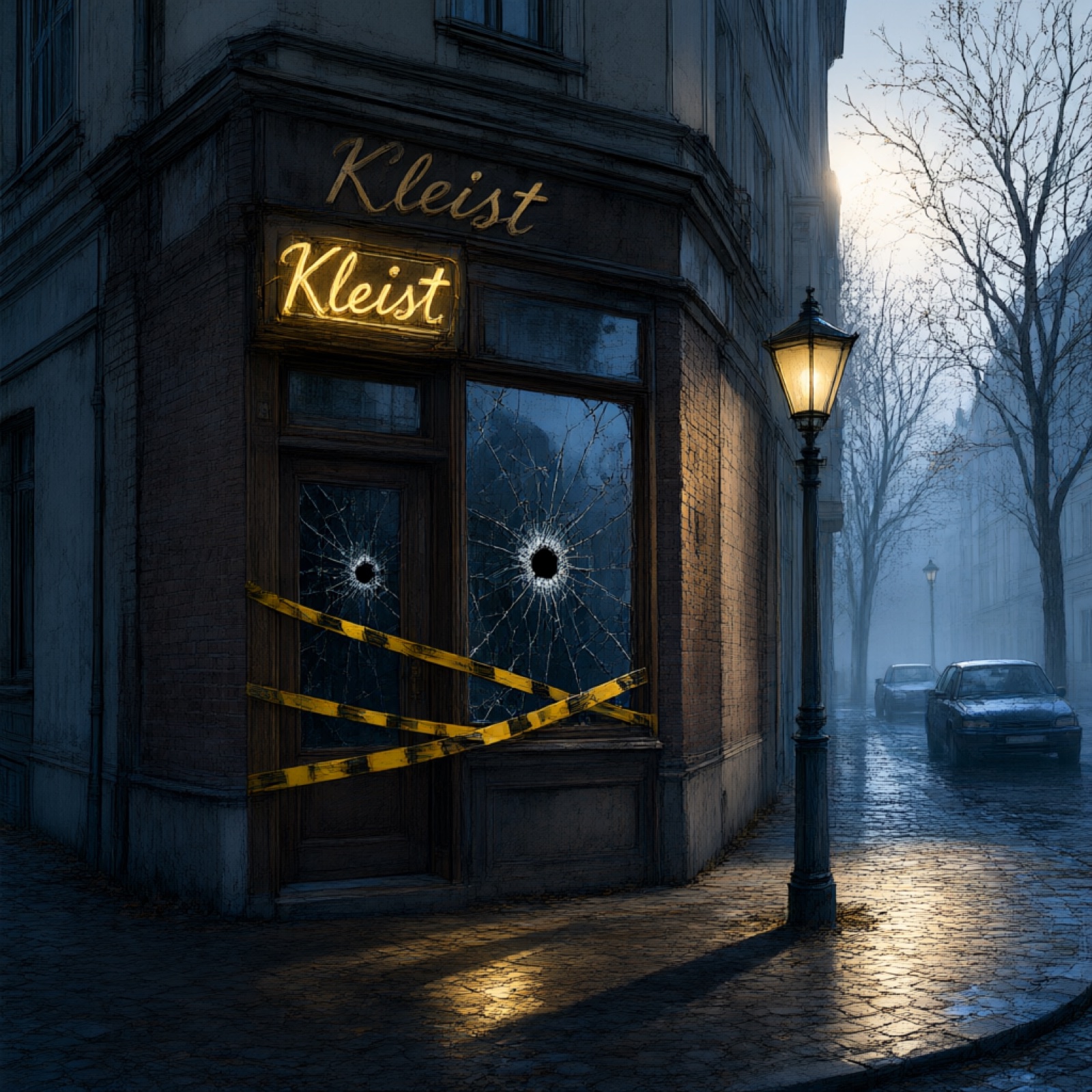
The Riga-Baltic branch on Brunsbütteler Chaussee is a nineties low-rise surrounded by chain-link fencing that looks more like scrapyard security than a logistics company. But the tarmac in the yard is freshly laid, the forklifts are new, and the sign at the entrance is in Latvian, German and — Kalle blinks — Russian.
“Three languages,” Leni says. “That’s not cheap.”
“Logistics clans aren’t cheap,” Kalle says.
The receptionist — bleached hair, flawless make-up, a smile that reveals three language courses and no surprise — leads them into a meeting room that could just as easily belong to a Charlottenburg law firm. LED lighting, water cooler, a coffee machine that cost more than Kalle’s first car.
Mirko Kovač enters without hurry. He’s taller than in the photo, and he’s wearing a grey suit that doesn’t fit him, the way a pit bull doesn’t fit in a handbag. But he smiles. The smile is genuine — and that’s exactly what makes it so unsettling.
“Mr Rieger. Ms Weber. Coffee?”
“No, thank you,” Leni says. She smiles back, and Kalle knows she’s having the same thought: this man is dangerous because he isn’t nervous.
“You’ve heard about the BMW?” Kalle asks.
“Naturally. Dennis Marquart is one of our finest dispatchers. I was appalled when I got the news. Who shoots at a twenty-two-year-old freight forwarding clerk’s car?”
“We’re asking ourselves the same thing. Any ideas?”
Kovač spreads his hands, a gesture that probably means innocence in Latvian and just looks wrong in German. “Staaken isn’t Kreuzberg. But every area has — how shall I put it — disaffected youths. Perhaps it was a silly prank. Or a mix-up. Or” — his smile narrows a fraction — “someone wanted to keep the police busy.”
Kalle leans back. “Keep the police busy? With three shots into the bodywork? That’s not keeping busy, Mr Kovač. That’s a statement.”
“A statement of what?”
“We’ll figure that out.”
On the drive back to Mitte, Leni says nothing for the first ten minutes. Then she snaps the tablet shut and says: “He never asked about the lad. Not how he was, not what he told us. Nothing.”
“Because he already knows,” Kalle says. “He knew about the holes before the patrol car got there. He knew we were coming. He knew what we’d ask. And he knew we had nothing.”
“So intimidation, then?”
“Looks that way. The lad does compliance, Kovač has a warning left at his car. Clean, precise, no casualties. Next step: resignation or worse.”
Leni shakes her head. “I don’t buy it. It’s too — simple. Kovač isn’t some street thug. The man’s got a façade that took twenty years to build. Why would he jeopardise it with an amateur shooter? Three shots into a car — that brings us straight in. Straight to BAO Ferrum. Exactly the attention he doesn’t want.”
Kalle thinks. “You mean — not Kovač?”
“I mean: it was someone who wanted exactly that result. Someone who wants us looking at Kovač because they’ve got their own problem with him. A rival. Someone inside his own clan who wants to weaken Kovač’s position. An internal power play.”
Kalle pulls over. Not because he needs a break — but because something’s just clicked. “Witalij. The corner-shop bloke. He said: a van, diesel, going too fast. But he didn’t say he heard the BMW. No tyres, no alarm, nothing. A 3 Series BMW’s got an alarm that goes off when a leaf drops on it. So why didn’t it trigger when three bullets went into the door?”
Leni gets it immediately. “He was still there. At midnight. In a closed corner shop.”
“Exactly. And why?”
The bell over the door jangles, and Witalij looks up as if he’s been expecting them. His face is expressionless, but his shoulders are less rigid than last time. As if a decision he’s made has taken some of the pressure off.
“More coffee?” Kalle asks.
“I don’t have coffee for policemen.”
“Then no coffee. But a question: you heard the van. Diesel. Too fast for this street. And then the shots. But you didn’t hear the BMW. No tyres, no alarm, nothing. A 3 Series BMW has an alarm system that screams when a leaf falls on it. Why didn’t it go off when three rounds went into the door?”
Witalij says nothing. The silence is a long one, and at the end of it he doesn’t shrug — he pulls a folded piece of paper from his pocket.
“Because I saw who fired,” he says. “And it wasn’t a van. The van was just the getaway. The shooter was one man on foot, alone. He came across the pavement, fired three rounds, then got into the van and left. And the BMW — it didn’t scream because the shooter had the key. He pulled it from his pocket, opened the door, deactivated the alarm. Then he shut the door and fired.”
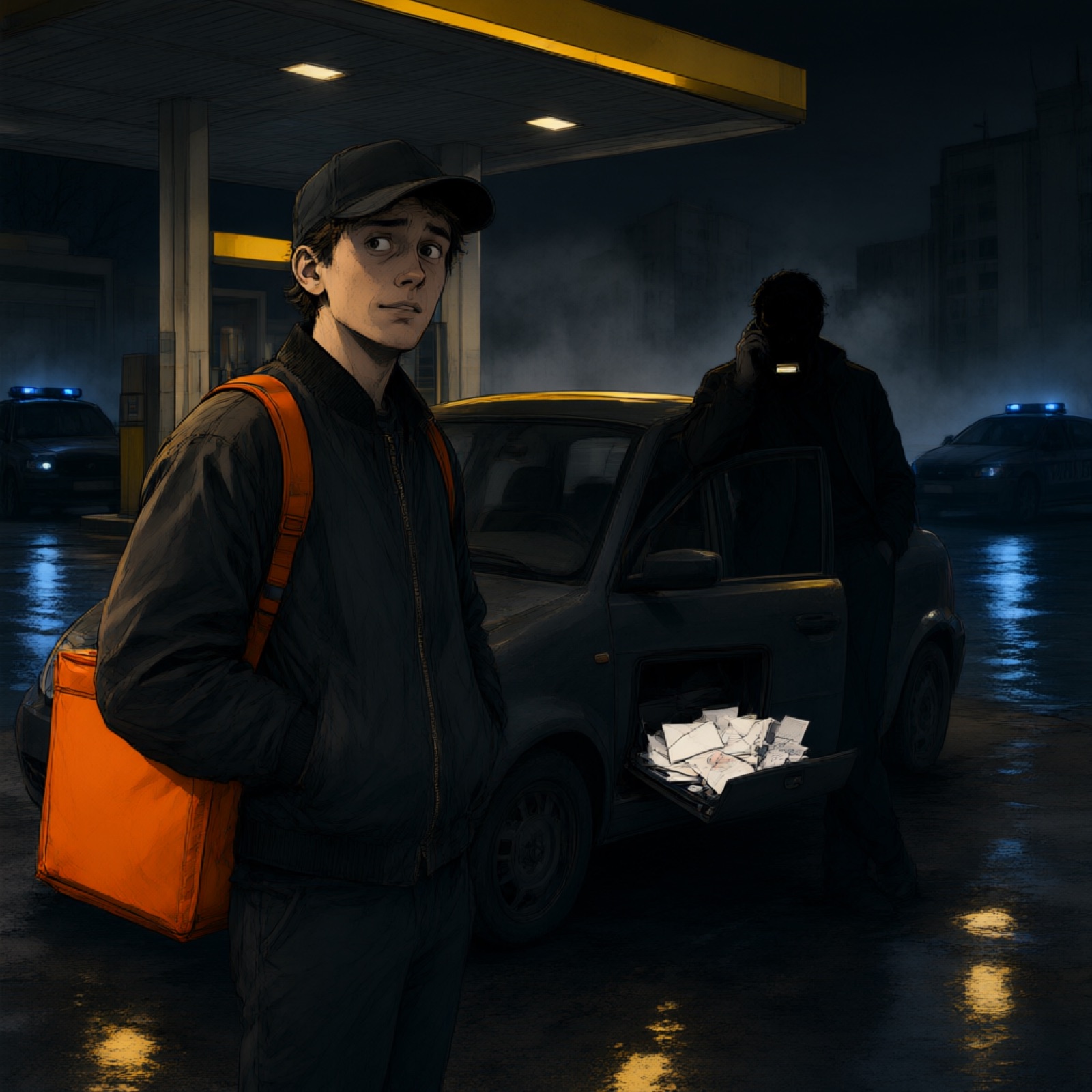
Kalle takes the paper, unfolds it. It’s a delivery note. Riga-Baltic-Logistics. Addressed to: Mirko Kovač. Contents: car parts. Declared as: agricultural machinery components.
“That’s the delivery from last week,” Witalij says. “The lad — Dennis — gave me the docket. In case something happened. He said: if something happens to me, give this to the police. Not BAO — the detectives.”
Leni stares at the delivery note. “He knew something was going to happen?”
“Since three weeks ago. Since he sent the report to Riga. After that, someone slashed his tyres. Then his front door was forced open, but nothing was taken. Then the phone call — a man with an accent, saying: compliance is unhealthy. And last night — "
“The shots,” Kalle says.
“Yes. But not from Kovač.” Witalij takes a deep breath, and his hands are trembling now after all. “The shooter was the lad himself. Dennis. He shot his own car. So Kovač would think it was a rival. So the police would go after Kovač. So he’d look like the victim and get himself out of the firing line.”
Leni falls silent. Kalle falls silent. A bus passes outside.
“He shot his own car,” Kalle repeats.
“Three times. All into the bodywork. No glass, no seats. He works at a logistics firm — the lad knows what a company car costs and what repairs cost. Replacing a door is cheaper than a hospital stay.”
“And the van?”
“My brother. He drove it. I lied when I said I close at ten. I sat here and waited till it was over. In case something went wrong.”
Kalle folds the delivery note and pockets it. He says nothing, and he doesn’t look at Leni, because he knows she’s having the same thought: they were both wrong. No botched intimidation, no power play, no clan revenge — a lad trying to steer himself out of the line of fire by using the only weapon he had: his own fear, staged as a threat.
“Where is he now?” Leni asks.
“At work. His shift starts at ten. He thought if he carried on as normal, nobody’d notice.”
“But someone did,” Kalle says. “Kovač knows. Not about the shots — about the compliance report. And now he knows the lad’s talked.”
He puts a business card on the counter. “Ring him. Tell him to go home, lock the door and wait till we get there. No heroics, Witalij. Just survival.”
The autumn rain sets in as they sit back in the car. Kalle starts the engine but doesn’t pull away. He stares at the delivery note, at the Latvian stamps, at the signature that isn’t Kovač’s — it belongs to a man who’s been dead for two years.
“He used a forged signature,” he says. “The lad didn’t just report compliance — he forged evidence to incriminate Kovač. And Kovač knows.”
“And now?” Leni asks.
“Now we get the lad out. And then we see how long Kovač keeps smiling when we put his whole stack of delivery notes on the table.”
He puts the car in gear. “And Leni — you were wrong. So was I. And that might be the best thing that’s happened to us all day.”
Disclaimer: All persons, places and events in this story are entirely fictional. It is inspired by a public police report but does not depict real events, persons or circumstances. Further information: Legal Notice.