The Wilmersdorf Window Cleaner
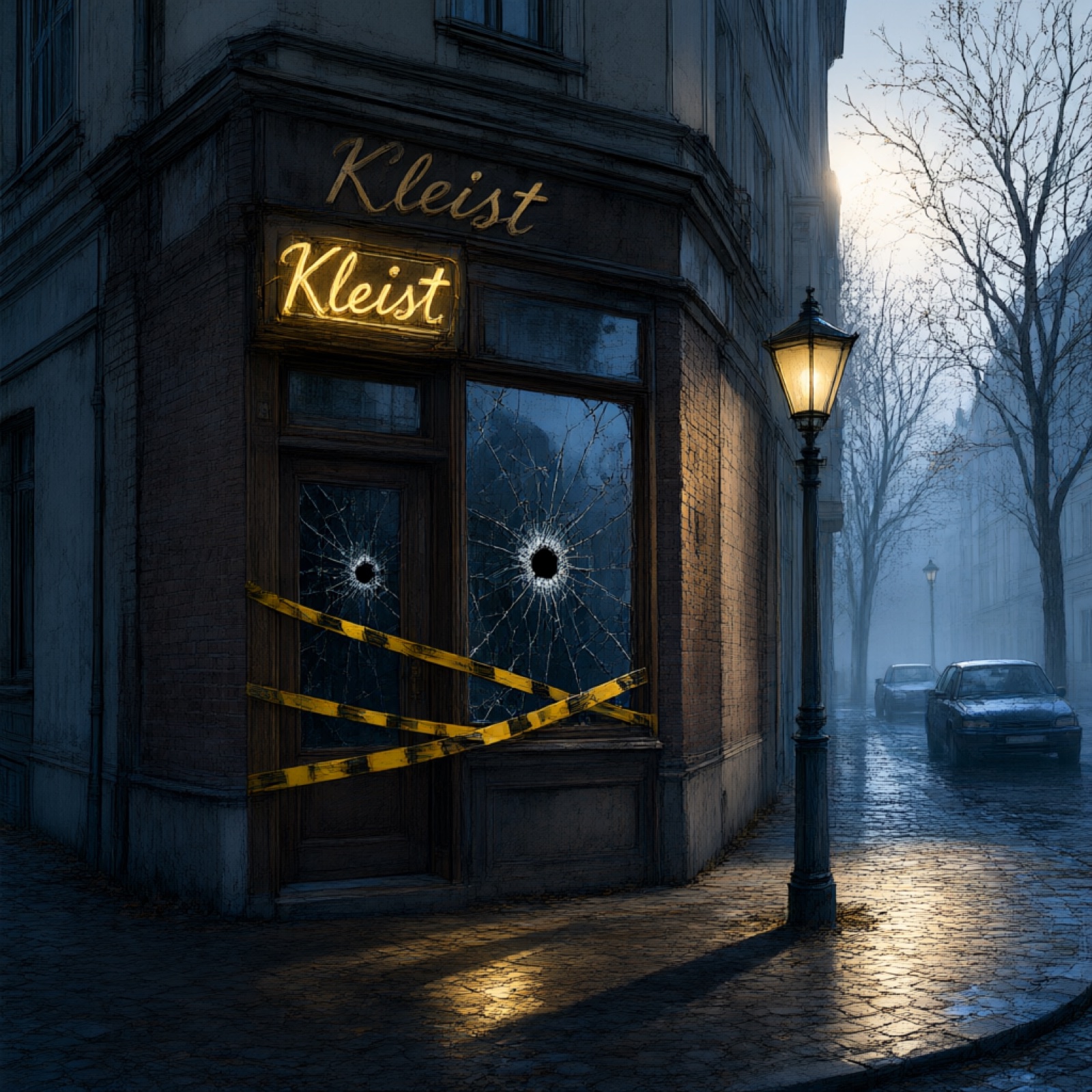
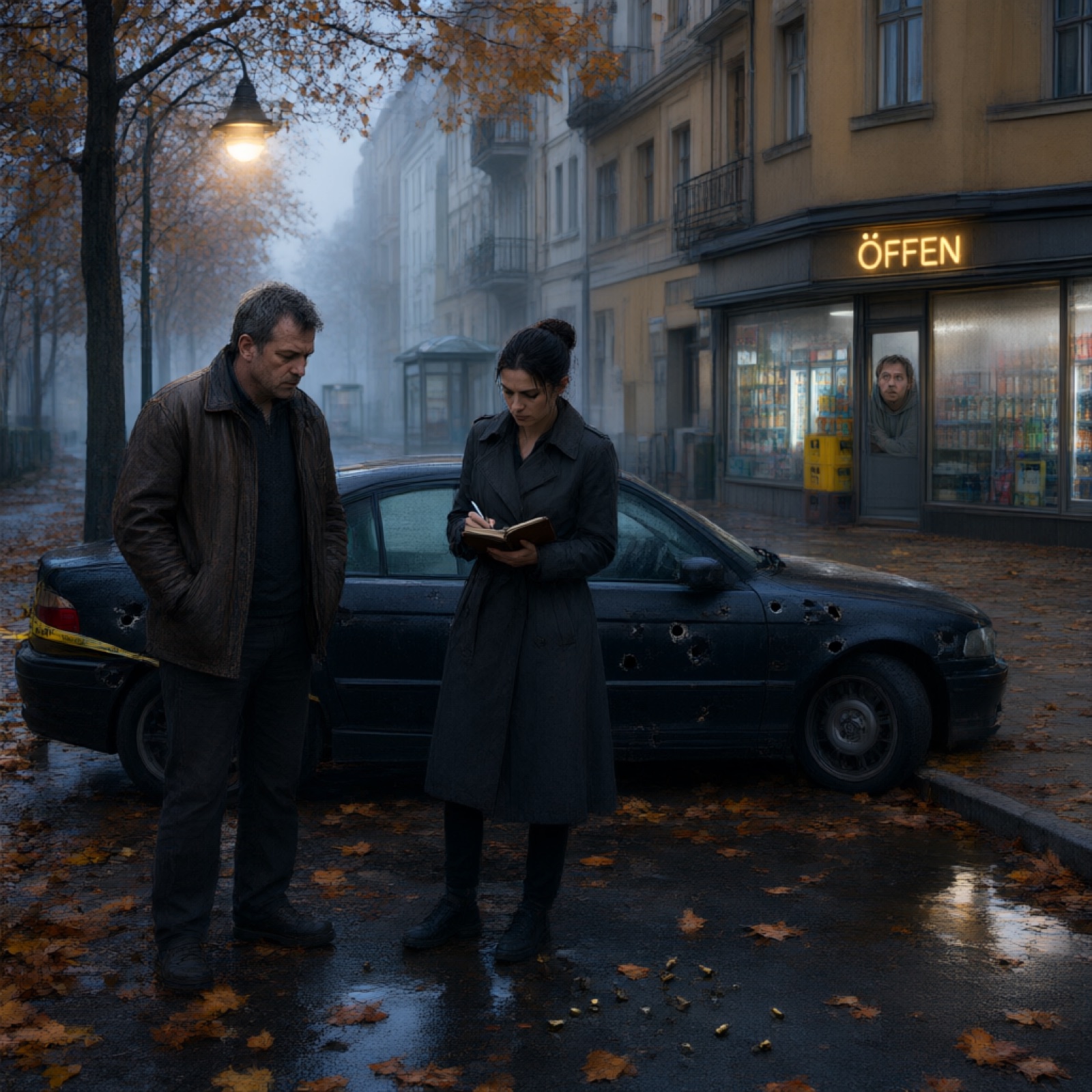
At quarter past seven, Pariser Straße looked like someone had tried to break the morning. Two patrol cars sat sideways in front of the Kleist-Bar, an establishment that at this hour was normally as empty as a polling station on election Sunday. The front window had a hole the size of a dinner plate, and around the hole was a web of cracks that, in the light of the rising sun, looked like a spider’s web made of glass. Kalle pulled the Golf up behind the cordon and took the coffee cup with him. “Coffee first,” he said, “then business.”
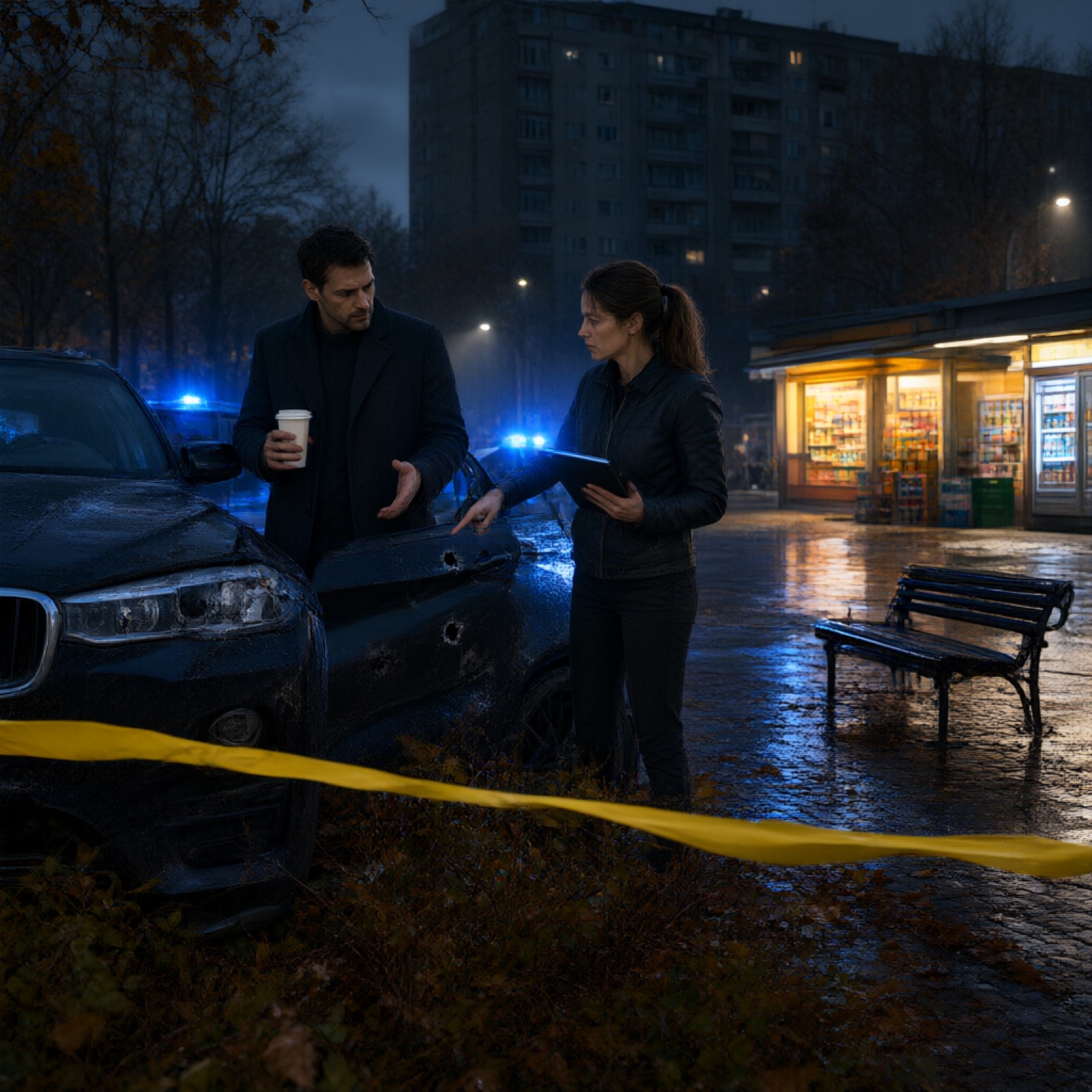
Leni was already out. “Two shots,” she said, “both through the window, one into the wall behind the bar, the second into the spirits. The vodka didn’t make it. BAO Ferrum’s already inside.”
“Ferrum,” said Kalle. “Someone got their skates on. At this hour you’d normally ring the caretaker first.”
Inside, it smelled of alcohol and stale smoke. The wall behind the bar was a wreck of broken glass and cheap vodka, and a man in a blue jumper stood in front of it looking like he’d lost the war before it had even started. His name was Manfred Dietz, he was the owner, and he didn’t look like he wanted to talk to anyone, least of all the Old Bill.
“I didn’t see anything,” he said. “I was upstairs. I was asleep.”
“At half six?” asked Kalle. “In a bar that stays open till five?”
“My flat’s above the shop. I was asleep. The window’s gone. That’s all I know.”
Leni looked at him the way she looked at all witnesses: not accusatory, but not believing either. “Two shots, Mr Dietz. Through your window. Into your bar. And you want us to believe you don’t know anyone who’d do something like that?”
“I’ve got no enemies,” said Dietz, wiping his forehead with his sleeve. “I serve beer and schnapps here, and the odd currywurst. It’s not a protection-racket address.”
“That’s the interesting bit,” said Leni. “BAO Ferrum deals with organised crime. They don’t turn up for a broken window. They turn up when someone thinks there’s something going on behind the window that’s bigger than beer and schnapps. So: what’s going on that we ought to know about?”
Dietz said nothing. Outside, a bus went by, and the light fell through the broken window directly onto the drinks wreckage on the wall.
BAO Ferrum had pulled their people together in a briefing room on the second floor of the station. Kalle and Leni stood at the edge, like detectives who belonged but didn’t belong. A chief inspector named Schröder, whom Kalle knew from way back and didn’t like, was pointing at a map of Wilmersdorf as if the district itself were the weapon.
“The casings are nine-millimetre,” said Schröder, “Parabellum, not tampered with. We’ve got two hits: one in the wall, one in the bottles. The gunman aimed through the window — that wasn’t a warning shot, that was a message.”
“What message?” asked Kalle.
“That Dietz should pay up. Or that he’s already late paying. Or that someone wants him to hand the place over. The lads in Organised say it’s standard practice in the trade: they call it window cleaning. You shoot a window out before you knock. The owner gets the message and does what he’s told. If he doesn’t, they come back.”
“Window cleaning,” repeated Kalle. “Sounds like a bloke with a sense of humour.”
“Sounds like a bloke who’s done this before,” said Leni. “Any matching cases?”
Schröder hesitated. “Not in Berlin. But the pattern shows up in East Prussia. Riga, Kaunas. The gunman never shoots at people — only at glass. For two years. But we never had a casing. This morning, he forgot the ejection.”
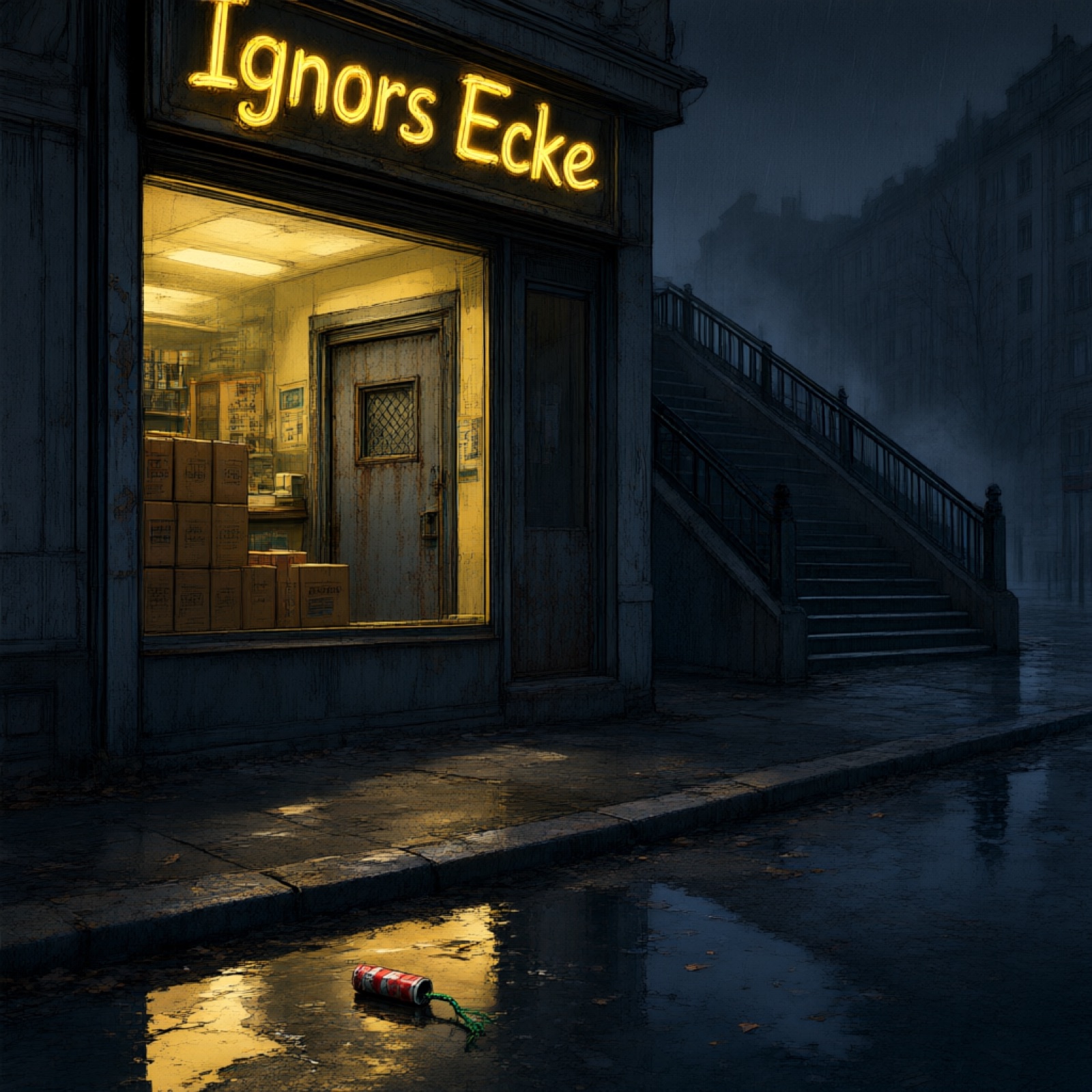
The corner shop on the corner of Pariser Straße was known to everyone simply as “Illya’s,” and Illya was a man who at nine in the morning already looked like someone who’d started at eleven the night before. Behind his counter were stacks of newspapers, deposit bottles and cartons of filter cigarettes, and when Kalle walked in, he looked up like an animal scenting the hunter.
“Morning, Illya,” said Kalle. “Good night?”
“I sleep at night,” said Illya, straightening the till. “Didn’t see anything.”
“I haven’t asked yet. But now you mention it: your window faces Pariser Straße. You were asleep at half six in the morning?”
“Yeah.”
“Good thing then that the bar next door has a window shot out and you’re still sleeping like a baby.” Kalle stepped closer. “Illya, I’m going to ask you something now, and I suggest you tell the truth. Not because we’re old mates — we’re not — but because the man who shot up the Kleist-Bar this morning might decide to shoot up your shop too if he’s in a bad mood. So: who’s got beef with Dietz?”
Illya sighed. He leaned forward, elbows on the counter, and looked like he was about to make a confession he didn’t much fancy. “There’s a man,” he said. “They call him the Window Cleaner. I don’t know him, I’ve never spoken to him. But I’ve heard he turns up when someone doesn’t pay. He doesn’t make threats — he cleans. One shot, one window. Then the message is clear and he’s gone before the police have even taken the emergency call. Dietz is in debt. Not to the taxman. To people who make their money from things you don’t talk about.”
“And you’re talking anyway?”
“Because you’re asking. And because you’re reminding me of the electricity-bill summer, and I don’t fancy you digging that file out again.” Illya lit a cigarette, even though it was banned in the shop. “The Window Cleaner isn’t a gunman, Kalle. He’s an arrangement. He doesn’t come himself — he sends someone. That’s the business model. He cleans windows, but he hasn’t got any hands.”
Leni sat at her desk in the office while outside the autumn day passed over Berlin and the light in the room shifted from grey to yellow and back to grey. It had taken her three hours to read the casing trail, and what she found was like the travel itinerary of a man who never flew to the same city twice in a row.
“Riga,” she said, when Kalle came in with two fresh coffee cups. “The casings from the Kleist-Bar are part of a batch that turned up eighteen months ago in a disused cartridge factory near Riga. Latvian customs impounded two crates at the time. The rest of the batch disappeared — probably via the market in Daugavpils, then across the border into Lithuania and north from there. But not all of it. Some of it turned up, always with the same pattern: front window shot out, never at people, always a message. Tallinn, Vilnius, Kaunas, now Berlin. The gunman changes — the casings stay the same. Someone’s selling the service. Someone sitting in Riga who takes window-cleaning orders like a call centre.”
“A hitman without the hits,” said Kalle.
“A hitman without the bodies,” corrected Leni. “That’s better than murder, Kalle. That’s a service that doesn’t carry a life sentence. The man running it calls himself Hartmann. Viktor Hartmann. Nickname ‘Vico.’ Former forwarding agent from Rostock, moved to Riga twelve years ago. The Latvians have a file on him, but no case — he’s clean. Until today. Today we’ve got a casing from his batch and a corner-shop informant who says the Window Cleaner is an arrangement. Now all we’ve got to do is prove Viktor Hartmann and the Window Cleaner are the same man.”
Kalle spent the evening in Wilmersdorf’s nightlife — which in Wilmersdorf meant a handful of bars, three corner shops and a pub where a man with a guitar was singing songs nobody wanted to hear. He asked after Dietz, after the Kleist-Bar, after a bloke they called the Window Cleaner. The answers were all the same: a shrug, a shake of the head, a “No idea, mate.” Until, in the fourth bar, he found a waitress who didn’t look away.
“I didn’t see the gunman,” she said. Her name was Tanja, she was in her mid-twenties and was already counting in her head the next shift she didn’t want to spend here. “But I know Dietz had visitors two weeks ago. Two blokes, expensive suits, not from Berlin. They talked to him for an hour, and afterwards Dietz locked the door, even though it was only eleven. He never does that.”
“You recognise the blokes?” asked Kalle.
“One wore glasses and looked like a tax accountant who earned too much. The other didn’t say a word. He just stood there looking out of the window. Like he was in Berlin for the first time and taking in everything he was planning to shoot up later. Then they left, and Dietz was shaking. But ask him and he’ll say: ‘No enemies.’”
At two in the morning, Leni’s mobile rang. It was the Latvian liaison she’d contacted in Riga, a captain named Bērziņš who spoke German as if it were his mother tongue, and who said: “Hartmann left the country this morning. For Berlin.”
“When did he land?” asked Leni, sitting bolt upright.
“Six thirty. About an hour before your shooting. Coincidence?”
Leni rang Kalle. “He’s here. The Window Cleaner’s in Berlin.”
They found Hartmann in a small hotel on the Kurfürstendamm, one of those places that looks like an insurance office from the outside and a seventies guesthouse on the inside. He was a slender man, late forties, with steady hands and a face that wasn’t unfriendly but gave nothing away. When Kalle and Leni stood at his door, he opened it as if he’d been expecting them.
“Mr Hartmann,” said Kalle. “Berlin CID. We’ve got a few questions about a broken window on Pariser Straße.”
Hartmann smiled, and it was the smile of a man who knew he didn’t need to say a thing to say everything. “A broken window,” he repeated. “And the police come in twos? Berlin must be a very safe place.”
“The window’s only the start,” said Leni. “We’ve identified the casings from your Riga cartridge batch. The corner-shop man next door told us about a Window Cleaner who, for money, tidies up problems before the police knock. And you landed in Berlin at half six this morning — an hour before someone shot up the Kleist-Bar. We don’t believe in coincidences.”
Hartmann sat down at the small desk in the room and folded his hands as if he were about to open a business meeting. “I’m a shipping agent,” he said. “I organise transport. What my customers transport is none of my business, as long as the paperwork’s in order. I have never in my life fired a weapon. I don’t know who shot at a bar. And I don’t know any window cleaner.”
“That’s remarkable,” said Kalle. “Because in your booking system — which we’ve had a look at — you booked a trip to Berlin three days before the attack. And because the IP address on your laptop connected to this hotel’s WiFi three hours after the shooting. And because you’ve mentioned Dietz’s bar before, in an email to a client, where you wrote: ‘The order on Pariser Straße will be completed on schedule. Window cleaning costs standard rate.’”
He put a printout on the desk. Hartmann looked at it, and his smile dropped like a blind being pulled down. For a moment the room was silent, apart from the traffic outside, which sounded like a sea that never arrives.
“Window cleaning,” said Hartmann at last, “is a service. I act as a broker between clients and specialists. What the specialists do is their responsibility. Ask the trade inspectorate.”
“We will,” said Leni. “But first we’re asking you why you flew to Berlin to watch the inspectorate at work. Why you’re staying in a hotel three streets from Pariser Straße. And why your ‘specialists’ use the same cartridge casings you bought in Riga eighteen months ago. That’s not brokering any more, Mr Hartmann. That’s a chain. And you’re the first link.”
Hartmann was silent. Then he said: “I want a solicitor.”
“You’ll get one,” said Kalle. “But until then, you can have a think about whether you want to go down in the file as a Window Cleaner or a logistics man. As a logistics man you might get a better cell. With a view.”
As they led him out, Hartmann stopped at the door and turned to Leni. “You know, Frau Weber,” he said, “if you saw my cost breakdown, you’d see I’m just a service provider. I’m not the one who shoots out the windows. I’m the one who makes sure it’s done properly. There are dozens like me. Arresting me changes nothing — except that the next Window Cleaner will have to manage without me.”
“The next Window Cleaner,” said Leni, “will find his own way to Berlin. And we’ll find him. That’s the difference between you and us: you clean windows so others pay. We don’t clean. We settle up.”
The next morning, Kalle and Leni sat in the office — the file was closed, the coffee was fresh, and outside it was raining quietly, the way Berlin does in October: unhurried, but persistent. The Latvian colleagues had taken over Hartmann’s computer and found a list of twenty-three “window-cleaning” jobs in five countries. Dietz had by now admitted he’d borrowed money from an organisation that didn’t charge interest but charged window repairs.
“The bloke called himself a Window Cleaner,” said Kalle. “And in the end he had an international logistics chain for shot-out windows. I’ve seen a lot of business ideas, Leni, but one where the bullet’s the offer and the window’s the bill — that’s a new one.”
“He never fired a single shot himself,” said Leni. “He only coordinated. The gunman, the weapon, the ammo, the escape route — all his logistics. But he never got his hands dirty. That’s exactly what makes him so dangerous. The Window Cleaner wasn’t the shooter. He was the man who makes the shooter redundant as soon as the job’s done.”
“And now?” asked Kalle.
“Now he’s sitting thinking about his cost breakdown. And we’re writing the file. But one of his clients has got no window to have shot out this morning, because his Window Cleaner was arrested in a hotel on the Ku’damm and the replacement is still in Riga packing his bags. That’s our window-cleaner principle, Kalle: we didn’t get the gunman — we got the man who organises the gunman. And that’s bigger.”
Kalle took a sip of coffee. “Good job,” he said. Nothing more.
Note: All persons, places and events in this story are entirely fictional. It is inspired by a public police report but does not depict any real events, persons or circumstances. Further information: Legal notice.