The Schnellerstraße Night
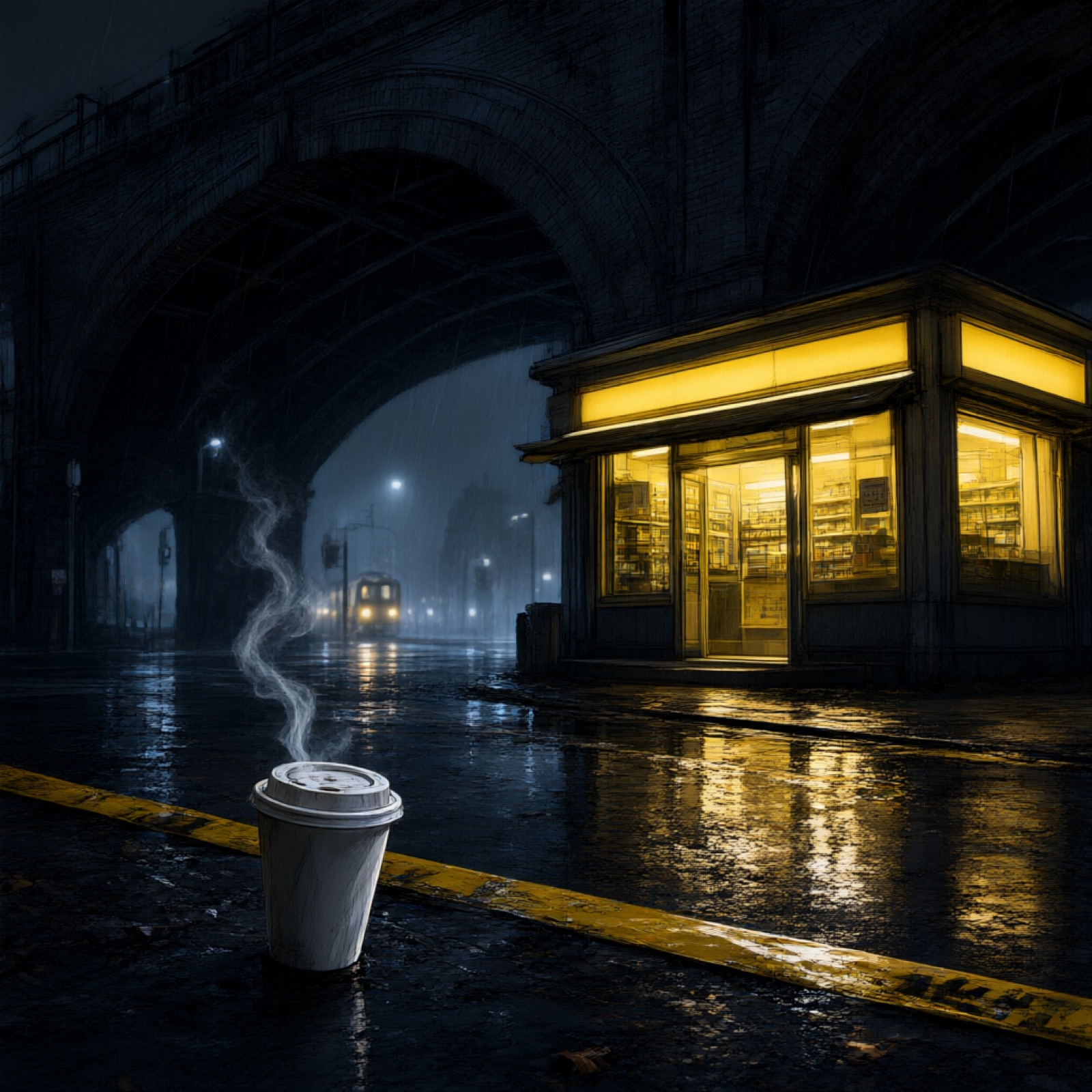
The asphalt was gleaming. Not rain — just that November damp that never quite dries. Niederschöneweide, half eleven at night. Schnellerstraße lay still except for the blue lights bouncing off the puddles.
Kalle pulled his jacket zip higher. The wind came across from the Spree, cold and damp. “Right. What we got?”
The uniformed officer, young, maybe mid-twenties, pointed at the pavement in front of the corner shop. “Male, twenty-five, Dennis Wagner. Multiple lacerations to both hands and the left thigh. Passer-by found him just after eleven. Conscious when the ambulance arrived.”
“Suspect?”
“Fled. Dark vehicle, heading towards Oberspreestraße. No plate, just ‘dark’ from the victim.”
Leni knelt beside the blood traces on the asphalt. Defensive wounds — the classic cuts you get when someone tries to stop a blade with bare hands. The deep cut on the thigh came later, when the victim was already on the ground or trying to run.
“He fought back,” she said. “Then he tried to get away.”
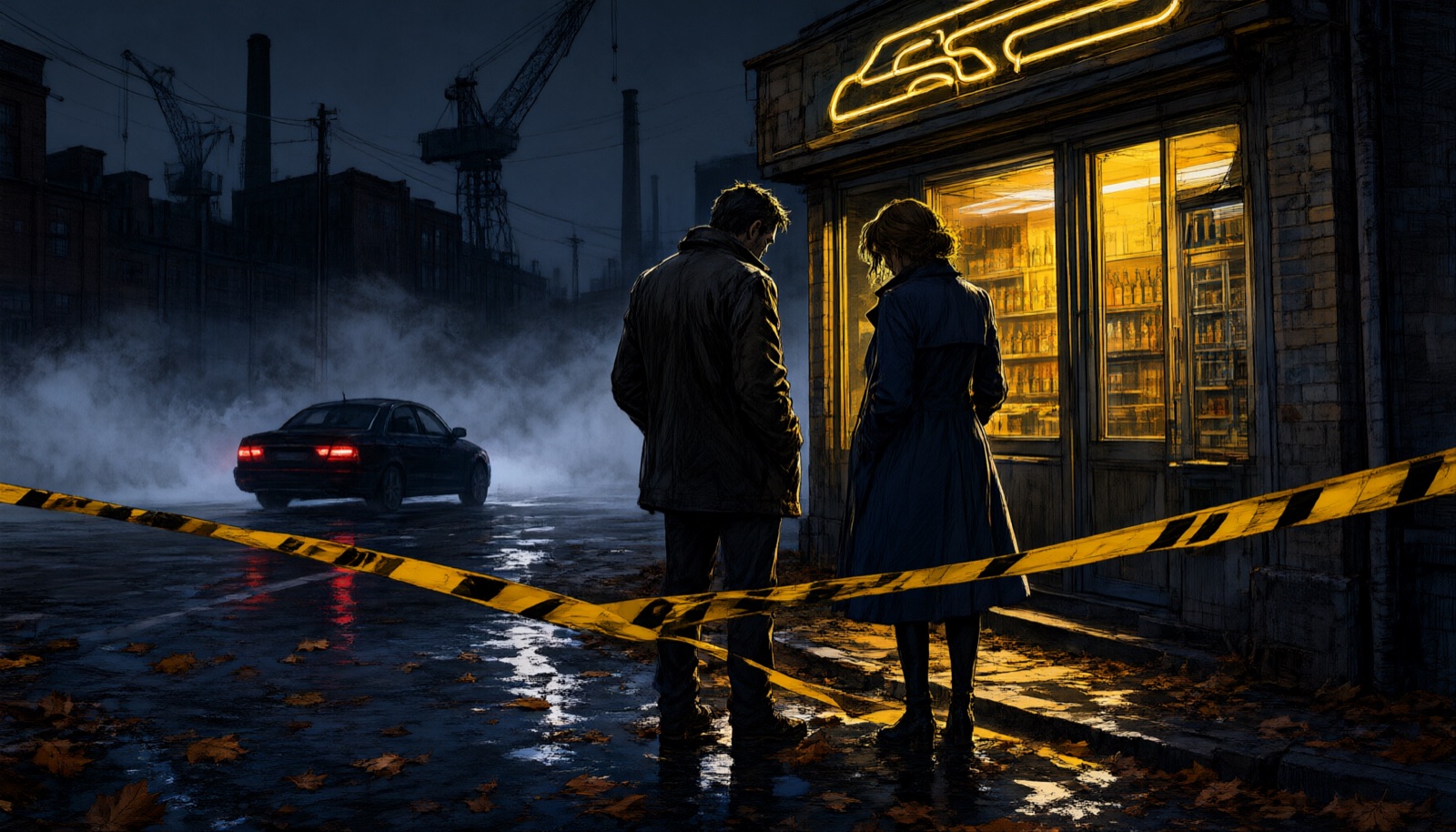
Kalle looked towards the corner shop. The neon tubes flickered. Behind the glass door stood a man, smoking, the cigarette an orange dot in the dark.
“I know that bloke.”
“Who?”
“The shopkeeper. Name’s Erkan. Got himself in bother two years back — illegal gambling machines in the back room. I never called the trade inspectors.”
“And now you want to collect.”
“What goes around, innit.”
They stepped inside. Erkan was behind the counter, a half-smoked cigarette in his fingers. The shop smelled of stale smoke and the sweetish tang of overripe bananas from a fruit rack that hadn’t been topped up in days.
“Erkan.”
“Herr Rieger.” Erkan’s face didn’t move. “It’s late.”
“Later now. That young lad bleeding out on your doorstep — he was in here before?”
“Could be. Busy night. Friday.”
“Friday night’s over by eleven round here. Only customers you get after that are the ones who’ve run out of beer at home.” Kalle stepped closer. “We’ll talk tomorrow. And when I come back, I want to see your CCTV.”
“It’s broken. Been broken a while.”
“Erkan.” Kalle said the name like a sentence that didn’t need a verb. “Can’t wait.”
Outside, the last ambulance pulled away. Leni tapped something into her phone. “They’ve got him at the hospital. Stable. We can talk to him in the morning.”
Kalle nodded. The wind tore at a strip of police tape. In the distance, towards Oberspreestraße, the taillights of a dark car vanished into the night — like an echo of what had happened here an hour ago.
“Niederschöneweide,” said Kalle. “This patch forgets quicker than the coppers do.”
Next morning, the hospital. Dennis Wagner lay in a two-bed room; the other bed was empty. Both hands bandaged, left thigh thickly dressed. Face pale, but awake.
Leni took the visitor’s stool. Kalle stayed at the window watching the car park — a habit he’d picked up twenty years ago and never dropped.
“Herr Wagner. Detective Chief Inspector Weber. My colleague, Inspector Rieger. Can you tell us what happened last night?”
Dennis nodded. Voice quiet but steady.
“I was at the corner shop. Buying cigarettes. Mario Lorenz was there.”
“You know him?”
“From the area. Lives nearby. ‘Know him’ is a bit strong. More like — you run into each other.”
“And last night he ran into you and cut you with a knife,” Kalle said from the window. “Why?”
Dennis hesitated. Looked at his bandaged hands. “I did some work for him. Small delivery jobs. Packages. Sealed bags. Never looked inside, honest. Once — two weeks ago — a package went missing. Someone nicked my bag out of the car at Schöneweide station. Two hundred euros’ worth, Mario said. I was supposed to pay by Friday.”
“And Friday was last night.”
“Yeah.” Dennis swallowed. “I didn’t have the money. Mario dragged me outside. Said I needed to learn respect. Then he pulled the knife.”
Leni leaned forward. “What exactly did he say?”
“‘Pay on time next time, nothing happens to you.’ Then he got in his car and drove off. Towards Oberspreestraße.”
Kalle turned around. “The packages. Where’d they come from?”
“Don’t know. Always different pick-up spots. Locker at Ostbahnhof. Back courtyard on Köpenicker Straße. Once a garage on Rudolf-Rühl-Allee. I never saw anyone. Just a message with an address and a time.”
“And who gave you the jobs?”
“I thought it was Mario. But once he said something — ‘The boss gets his money.’ That’s all I know.”
Leni stood up. “That’ll do for now. Thank you, Herr Wagner. You’ve been very helpful.”
In the corridor, Kalle said: “The boss. So it’s not just some knife-happy courier.”
“Looks that way.”
The corner shop, late morning. November light fell slantwise through the door, a low sun that’d be gone by three. Erkan was sorting bottle returns when Kalle walked in. Alone this time.
“Morning, Erkan.”
“Herr Rieger.”
“The CCTV?”
“Tried. Really is broken.” Erkan shrugged. “Old model.”
Kalle leaned against the counter. The fridge hummed. “Alright. So tell me what you saw.”
“Didn’t see nothing.”
“Erkan.” Kalle picked up one of the return bottles and set it aside. “Remember those gambling machines? The not-so-legal ones? I kept my mouth shut back then. Today I need something from you.”
Erkan lit a fresh cigarette. The smoke drifted in a thin thread towards the ceiling. Long pause.
“Mario Lorenz. Yeah. I saw him. He comes in here regular. Uses the shop as a meeting spot. Does business. The bloke he met yesterday — around ten — big bloke. Tattooed. They were arguing. Not loud, but — you could feel it. Then the big one left. And right after, the young lad came in. Dennis. Five minutes later, Mario’s doing his nut.”
“What were they arguing about? Mario and the tattooed one?”
“No idea.” Erkan shook his head. “But Mario said: ‘Tell the boss I’ll sort it.’ The big one just laughed and walked out.”
“What time was this?”
“Just before eleven. I was thinking of closing.”
Kalle nodded slowly. “And Mario’s car. What’s he driving?”
“Dark 3-series BMW. 2018, I’d say. Plate —” Erkan grabbed a receipt and scribbled something. “There. Made a note. Never know when you’ll need it.”
Kalle took the receipt. “Why didn’t you say any of this straight off?”
“Because Mario’s got a knife.” Erkan’s voice went low. “And because he knows where my kids go to school. I’ve got two daughters, Herr Rieger. Nine and twelve.”
Kalle folded the receipt, pocketed it. “We’ll sort the kids situation. But Erkan —” he stopped, hand already on the door — “if you know anything else and you keep it from me, we’re done. Got it?”
Kalle dropped the receipt with the plate number on her desk. She had the registration sorted the moment it landed in front of her. “BMW, dark blue, registered to a leasing company in Spandau. Known front — turns up in at least four investigations. But the car’s not showing on any tracker. Probably tucked in a garage.”
“Matches,” said Kalle. “So we need someone who knows the garages round Treptow.”
“An informant.”
“I prefer ‘professional acquaintance’.” Kalle grabbed his jacket. “Come on. We’re going to see Pawel.”
Pawel Jankowski’s yard was on an industrial lot by the Spree, just before Köpenicker Brücke. Containers, forklifts, a half-rusted van with no wheels. Pawel was mid-forties, wiry — the kind of man who never seemed to feel the cold. He stood between his vehicles on the phone when Kalle and Leni pulled up.
“Pawel.”
“Kalle.” He snapped the phone shut. “Been a while. And you brought company.”
“That’s my colleague, Weber. We need a bit of info.”
“Costs.”
“Doesn’t. This is payback for that customs business. The containers from Szczecin. Ring a bell?”
Pawel sighed. “You really know how to ruin a bloke’s morning, don’t you. Right. What?”
“Mario Lorenz. Calls himself ‘Messer’. Works as a courier on your patch.”
Pawel drew on his cigarette. “Mario. Right. He’s been about six months now. Nicking rounds off me. My rounds. Scared two of my drivers into working for him. I kept quiet — don’t want aggro.”
“Who’s he working for?”
“Bloke called Schilling. Loan shark. Small sums, mental interest. Mario’s just the muscle. After last night —” Pawel grinned, crooked — “he’ll be lying low.”
“Where?”
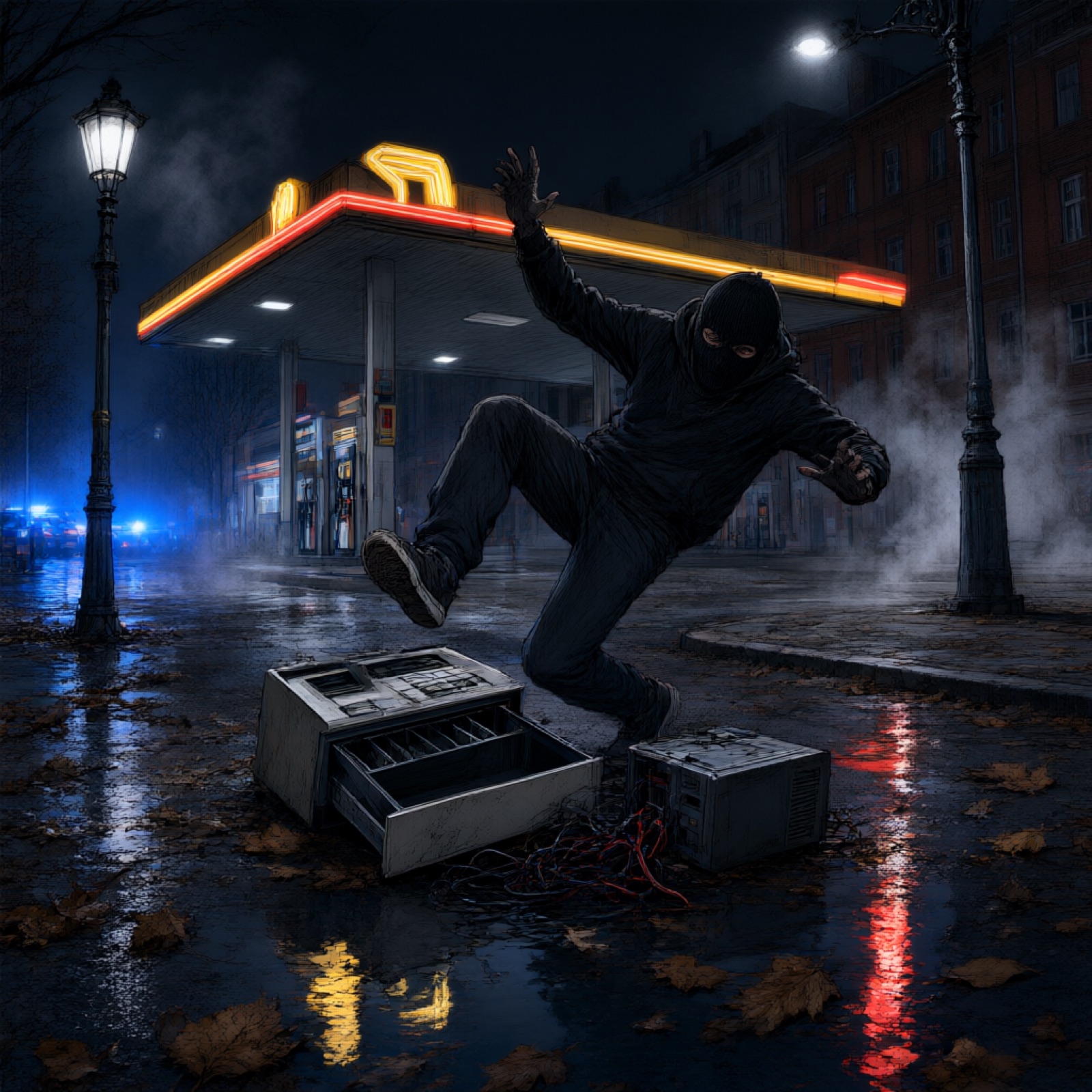
“Old petrol station on Oberspreestraße. Been shut ten years. There’s a garage out the back — that’s where he stashes the BMW. But I’ll tell you now — he’ll be gone by tonight. If he’s not already.”
Leni typed the address into her phone. “How many exits from the site?”
“Two. Front’s the petrol station, rear’s a gap leading to the car park of that old furniture warehouse. Fence is knackered, you can get through.”
“Pawel.” Kalle’s tone went businesslike. “Cheers.”
“Get stuffed.” But he said it without real venom. Almost matey.
They parked two hundred metres from the petrol station. Afternoon, already getting dark. The low autumn sun painted long shadows across Oberspreestraße. The site was derelict — pumps gone, windows boarded, graffiti on the walls. Tags, not art.
Four plainclothes officers in two cars were in position. Leni watched the garage through binoculars. “Door’s shut but not locked. Dark vehicle behind it. BMW body.”
“So he’s still here,” said Kalle. “Or it’s bait.”
“We wait.”
They waited. Kalle drank cold coffee from a paper cup. Leni checked the plates of passing cars — force of habit. Dusk turned to darkness. Traffic on Oberspreestraße thinned out.
At 17:12 the garage door opened. A man stepped out — early thirties, stocky, shaven head. Tracksuit top, trainers. Gym bag in his hand.
“That’s him,” Kalle said into the radio. “Mario Lorenz. Wait for my signal.”
Mario walked to the BMW, opened the driver’s door, threw the bag onto the passenger seat. Kalle let him get in, start the engine — and then, as the car reversed out of the garage:
“Now.”
Two cars blocked the approach. Headlights flared. Kalle and Leni got out, badges in hand.
“Mario Lorenz! Police! Engine off, hands on the wheel!”
The BMW stopped. For a moment that stretched like chewing gum, nothing happened at all. Then the driver’s door opened. Mario got out, hands half raised, but his expression was calculated — a man weighing up whether running was still on the table.
“Alright,” he said. “Alright. What do you lot want?”
“Chat with you. About last night. Schnellerstraße. Dennis Wagner.”
“Never heard of him.”
“Funny.” Leni stepped up beside Kalle. “We’ve got a witness who saw you. A victim who knows your name. Blood traces on the tarmac, and a plate that matches your vehicle. Also —” she gestured at the gym bag on the passenger seat — “I’d wager there’s a knife in that bag that matches the wound pattern.”
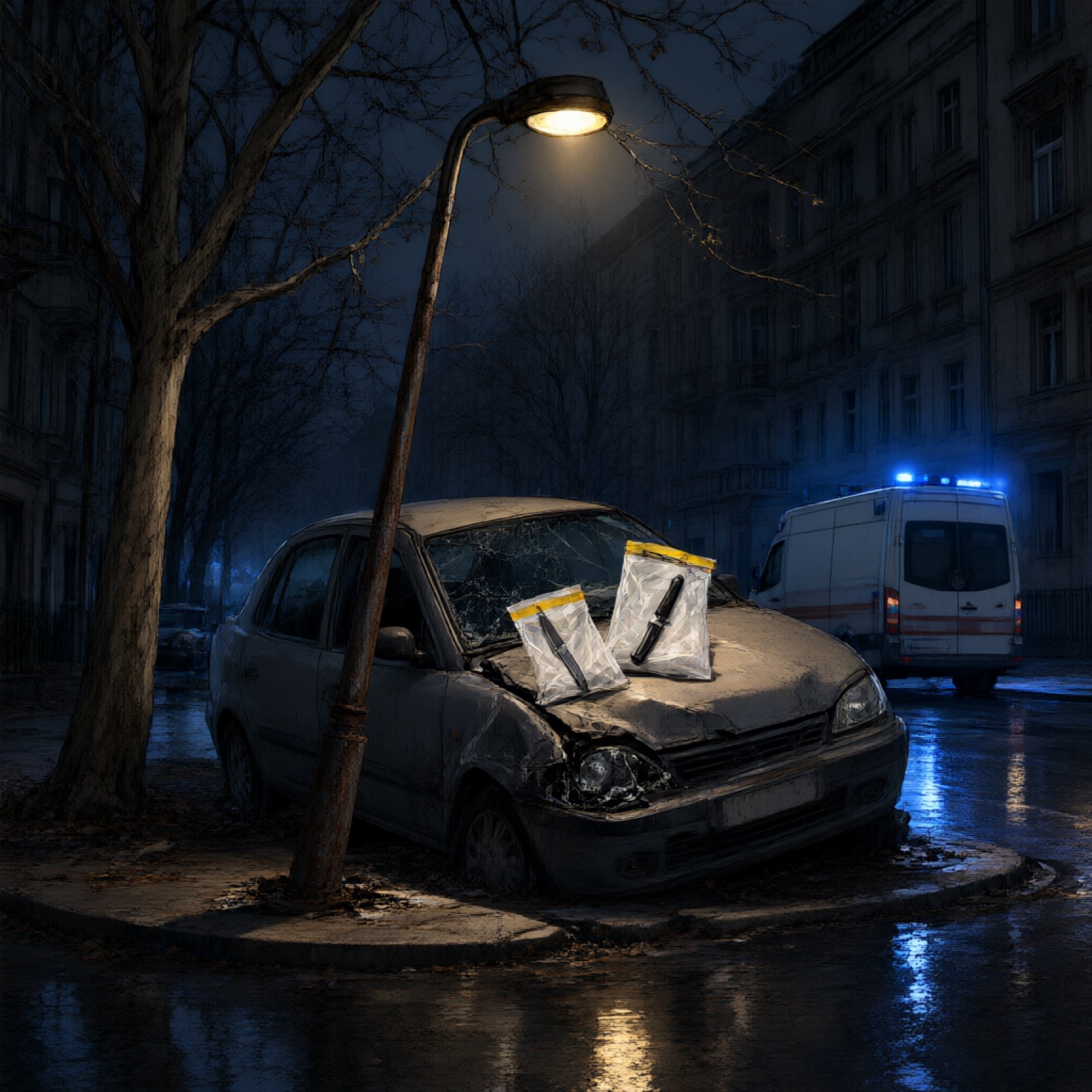
A uniformed officer opened the bag. Clothes. A phone. And a flick knife, blade discoloured.
“Self-defence,” said Mario. “He came at me.”
“With what?” Kalle picked up the knife — latex gloves, careful. “A pack of fags? Dennis Wagner’s got classic defence wounds on both hands. He was trying to stop the blade. While you were carving him up.”
Mario stayed silent.
“You work for a man named Schilling. Loan shark. Small sums, nasty interest. And when someone doesn’t pay — you show up. Last night it was Dennis Wagner’s turn. Two hundred euros he never paid. You taught him a lesson, didn’t you.”
“Lawyer,” said Mario. “I want a lawyer.”
“You’ll get one. But first you’re coming with us.”
Back at the station, two hours later. Kalle and Leni sat at their desks, the paperwork piling up. Chief Inspector Brandt came out of her office, glasses on her nose, a sheet of paper in her hand.
“Rieger. Weber. Status?”
“Suspect in custody,” said Leni. “Knife secured, witness statements solid. Mario Lorenz — aggravated assault, illegal weapons possession. Financial unit’s taking over the Schilling angle.”
Brandt nodded curtly. “The victim?”
“Wagner’s been discharged. He’ll have scars but no permanent damage. Gave a solid statement.”
“Good.” Brandt took her glasses off, polished them, put them back on. “This courier pseudo-package business — that goes to Organised Crime. Not ours anymore. You’ve got your man.”
She left. Kalle leaned back, hands behind his head. “Right then. That’s that.”
“For today,” said Leni. “Schilling’s still out there.”
“Tomorrow,” said Kalle. “Coffee first, then the serious stuff.”
“That coffee’s stone cold.”
“I know.” He took a sip anyway.
Note: All persons, places, and events in this story are fictional. It is inspired by a public police report but does not depict any real events, persons, or circumstances. Further information: Legal Notice.