The Gneisenaustraße Explosion
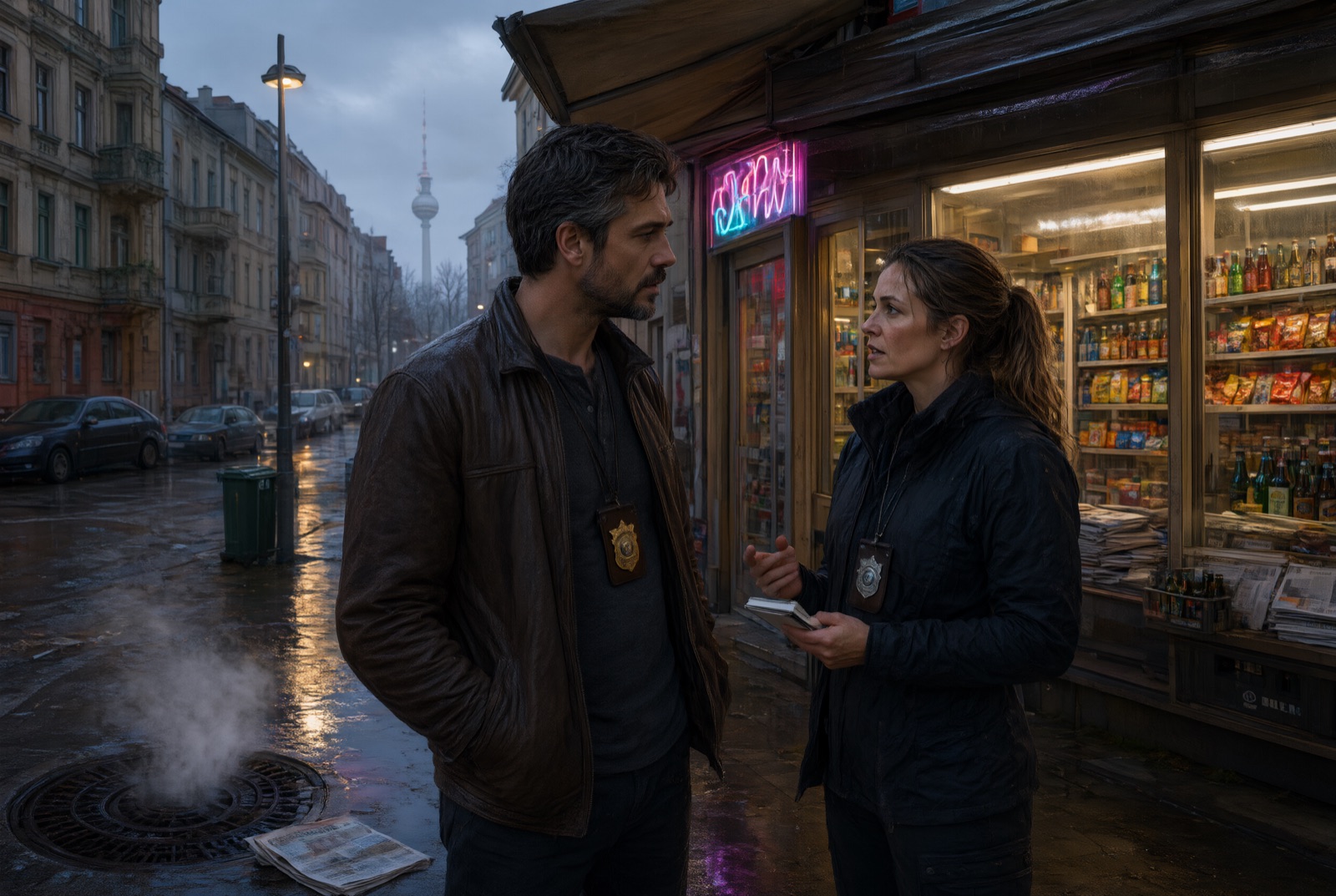
Half past two in the morning and the duty mobile doesn’t ring. Just vibrates, that deep buzz against the thigh that’s dragged Karl Rieger out of kip for fifteen years before the first thought’s even formed. He lies there, staring at the ceiling of the Altbau flat in Yorckstraße, hears the U-Bahn rumble through the pillow — U7, direction Rathaus Spandau, always bang on time, always loud — and knows before he even glances at the screen: Gneisenaustraße. Kreuzberg again. Always bleedin’ Kreuzberg.
“Rieger.” Voice rough, still thick with sleep.
“Kalle, Gneisenaustraße. Cash machine. Explosion.” Lena Weber. Not a trace of sleep in her voice. Never is. “Thirty-two minutes ago. Cameras blinded. Perps gone.”
“Right you are, mate.” He sits up, swings his legs out, hunts for yesterday’s jeans. “Coffee?”
“Already on its way. Meet at Gneisenaustraße exit, five minutes.”
He dresses in the dark, same old moves. Leather jacket. Warrant card on the lapel. The hallway mirror shows a thirty-nine-year-old with grey-blue eyes, three-day stubble and a scar by the left eyebrow — souvenir from a knife-wielder in Wedding, nine years back. Looks like a bloke who’s seen too much. Truth is, he has.
The U7 rattles through the tunnel, neon-bleached light in the windows, the few passengers’ faces knackered, sniffly, heading home or to shift. Kalle stares into the darkness outside, sees his own reflection grimacing back. Gneisenaustraße. The name sounds like Prussian military history, but smells of döner grease, club mats, corner shop beer and that sweet whiff of cheap hash drifting up from the back yards.
Gneisenaustraße exit. Leni stands under the yellow BVG sign, coffee-to-go in hand, dark jacket, hair pulled back in a ponytail. Looks like always: controlled, awake, those hazel eyes scanning the square. Forty-two, but the lines round her eyes tell more than the age.
“Mornin’, Leni.” He takes the cup she holds out. “Black, strong, no nonsense.”
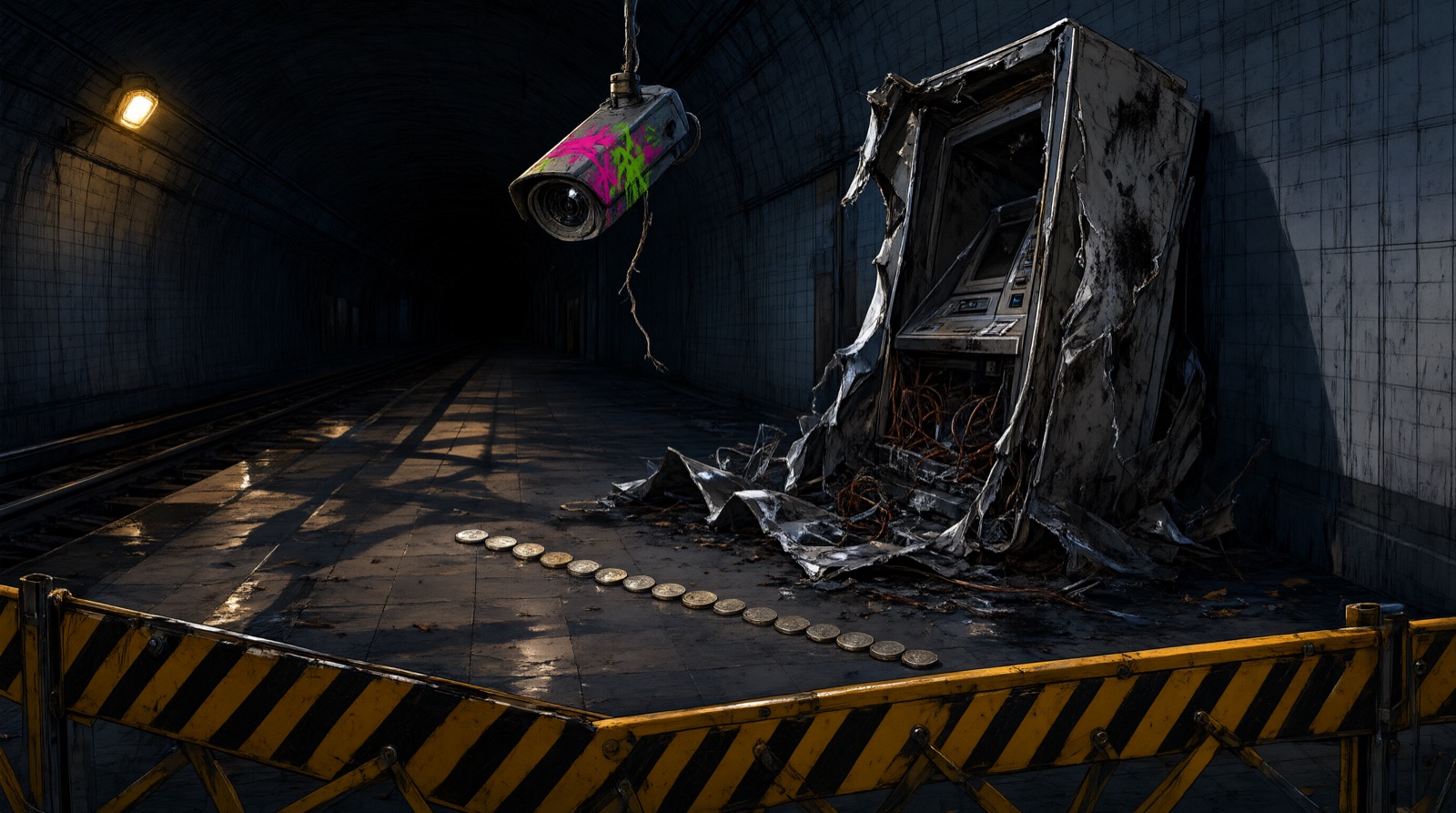
“Exactly.” She nods toward the cordoned area. “Berliner Sparkasse cash machine. SB foyer, right by the entrance. Two perps, oh-two-thirty. Cameras sprayed with red paint — professional, opaque, no reflections. Then gas pumped in, ignited, bang. Foyer’s history. Machine in bits. Haul: empty, refill wasn’t due till morning.”
Kalle takes a sip. Burns. Good. “LKA here yet?”
“Forensics since oh-four. Brandt’s called, wants first assessment by six. LKA reckons pro crew, Eastern Europe connection, same MO as Neukölln three weeks back and Wedding end of September.”
“Always the Eastern Europe connection.” Kalle puts the cup down, lights a fag. The lighter flickers in the wind howling up from the tunnel entrance. “And what’s your gut say?”
Leni raises an eyebrow. “My gut says: drink coffee. My head says: look at the scene before the forensics lot flatten everything.”
They head down the stairs. The SB foyer’s a wreck. Glass shards, metal scraps, the machine a ripped-open belly of steel and cables hanging like guts. The stink: burnt plastic, sulphur, petrol, and underneath — Kalle breathes deep — something sweet. Acetylene? Propane? Something that smells of a workshop, metalwork, a proper trade.
“Gas main punctured?” he asks the forensics bloke, mid-thirties, specs, white coat, snapping photos.
“Nah. Fed in from outside. Hose through the ventilation shaft.” The bloke points at a black pipe poking from the ceiling panels. “Professional. Pressure regulator, electronic ignition, timer. No botch job.”
“Paint on the cameras?”
“Red. Spray gun, opaque. Two cameras in the foyer, one at the lift, one outside at the exit. All four blind. The outside camera caught the perp legging it — silhouette, dark blue overalls, hoods. That’s it.”
Kalle nods, goes to the entrance, sniffs again. The sweet smell’s stronger here, mixes with the cold night air. He turns. Across the way, past the cordon, a corner shop’s yellow sign glows. “Bei Mutti” in curly letters over the door. Light’s on, a few shapes inside — night owls, shift workers, the sort who keep Berlin running after dark.
“Leni.” He jerks his chin over. “The corner shop. Opposite. The keeper’s seen something. Or smelled it.”
Leni follows his look, sighs. “Ahmet?”
“Different manor. Different debt.” Kalle grinds the fag out. “Come on.”
The corner shop stinks of fag smoke, beer, grease and the sharp spice drift from the kebab shop next door. Behind the counter stands a bloke late fifties, grey hair, a T-shirt that was white once, arms folded. Eyes them with a look that’s seen everything and forgotten nothing.
“Kalle.” Voice like gravel. “Leni. What’s up? Broken somethin’ again?”
“Mornin’, Mehmet.” Kalle leans on the counter, casual but eyes sharp. “We need your nose. Not your eyes. Your nose.”
Mehmet spits in a rag, wipes a beer stain. “My nose is for dosh. Not for the Old Bill.”
“Old debts.” Kalle says it flat, no threat. “Your lad. The designer shirts. Customs. Ring a bell?”
Mehmet’s jaw tightens. Eyes narrow. Long silence, just the door bell chime as a drunk stumbles in, grabs three Sternis, stumbles out.
“What d’you smell?” Mehmet asks at last. Quiet. “I smell nothin’. Just beer and grease.”
“Don’t lie.” Kalle leans in. “Two-thirty. Explosion. You were awake. Door open. What came across?”
Mehmet stares. Then breathes out, long and rough. “Gas. Burnt. Sweet. Like welding. And …” He hesitates. “Two geezers. Dark blue overalls. Hoods. Didn’t run for the exit. Ran in. Into the tunnel. Toward Mehringdamm.”
Kalle and Leni exchange a look. Not a word. None needed.
“When?” Leni asks. Precise. Calm.
“Right after the bang. Maybe two minutes. I opened the door, thought what’s up. They came jumping, not sprinting. Calm. Like they knew exactly where to go.”
“Tunnel access?” Kalle asks.
“Maintenance hatch at the platform end. Direction Rathaus Spandau. Usually locked, but …” Mehmet shrugs. “Lock’s knackered. See the lads there sometimes. BVG lot. Cleaners. They’ve got keys.”
“Cheers, Mehmet.” Kalle straightens. “Debt’s paid. Once. Not twice.”
Mehmet just grunts, turns away, polishes a glass that ain’t dirty.
Up on the platform it’s colder. Wind whistles through the tunnel, brings the smell of oil dust, brake pads and the sweet leftover of the explosion. A BVG cleaner pushes a trolley, grey uniform, yellow hi-vis, broom clattering on concrete. Stops when he sees them, leans on the broom handle.
“Rieger. Weber.” He nods. “Werner. Werner Pappke. Cleaning crew, night shift.”
Kalle knows him. Everyone knows Werner, twenty years scrubbing the U7, every crack, every corner, every type warming the benches at night. “Werner. What’d you see?”
Werner scratches his chin, eyes on the tunnel. “Two-thirty, bang. I was at Mehringdamm platform, direction Rathaus Spandau. Heard the bang, saw the smoke drift over. Then — two minutes later — two blokes come out the tunnel. Out the tunnel. Not from the platform. Dark blue overalls, dust masks, no hoods now. Walking sharp, not running. Toward Gneisenaustraße exit. One’s got something in his hand. Bag? Sack? Can’t say. Then they’re gone. Into the night.”
“Description?” Leni asks. Notebook out, pen clicking.
“One big, broad shoulders. Other smaller, wiry. Both mid-thirties, maybe. No faces seen — masks, dust, dark. But …” Werner hesitates. “The big ‘un. He was limping. Slight. Left leg. Like somethin’ wrong with it.”
Kalle nods slow. “Limping. Left leg. Good.”
“Eighty percent,” Werner mutters. “Maybe seventy. Was dark. Smoke. But the limp — that was real. Wasn’t put on.”
Leni writes, nods. “Thanks, Werner. We’ll be in touch.”
“Do that.” Werner pushes the trolley on. “And tell Mehmet to lock his door at night. Don’t want no one coming in who don’t pay.”
They head back to the scene. Forensics are packing up, sniffer dogs have hit — explosive residue, gas, but no human traces. Gloves. Pros.
“Pro crew,” says Leni as they climb the stairs. “Eastern Europe. Same pattern. LKA’ll be chuffed.”
“LKA’s always chuffed when it fits in a pigeonhole.” Kalle breathes the morning air, first grey streaks in the sky over Kreuzberg. “Two blokes. Dark blue overalls. One limps left. Know exactly where the maintenance hatch is. Don’t run — walk. And the corner shop keeper smells welding gas. That ain’t no Eastern Europe crew, Leni. That’s a trade. A Berlin trade.”
“Sven Kowalczyk?” she asks. “The Explosive?”
Kalle stops, turns to her. Morning air makes their breath visible. “Know the name?”
“Heard of ‘im. Legend. Ex-mine clearer, Bundeswehr, then private sector — blast work for construction, tunnels, demolition. Five years ago got the boot, booze, botched a blast in Munich, two injured. Since then: black economy. Allegedly does ‘special jobs’. No structure, no crew — just him and whoever fits.”
“And he limps left.”
“Leg injury from the Munich blast. Shrapnel. Stiff knee.”
Kalle pulls out the fags, lights one, offers Leni. She shakes her head. “So,” he says, blowing smoke. “Either our Kowalczyk’s the biggest coincidence since the invention of the currywurst — or he’s our man. And if he’s our man, he’s just blown a cash machine that weren’t even filled. Why?”
“Distraction?” Leni suggests. “Test? Trial run?”
“Or a message.” Kalle stares into the tunnel where the U7 rattles again, yellow light tearing the dark. “Someone told him: blow the machine. Show what you can do. And he delivered. But the money weren’t the target. The target was … us.”
“Us?” Leni frowns.
“Or someone watching us. Wanting to know how we react. Whether we jump on the Eastern Europe trail. Whether we question the corner shop keeper. Whether we take the cleaner serious.” He flicks the fag away, grinds it. “Tomorrow morning the Sparkasse refills the machine. We’ll be there. And we’ll watch who’s watching.”
Leni pockets her notebook, looks at him long and hard. “Good job today.”
“Right you are.” He grins, that lopsided grin that puts more lines round his eyes than any laugh. “First, proper coffee. Not that paper cup muck.”
They walk up Yorckstraße toward Kottbusser Tor. The city’s waking. First delivery vans, first joggers, a corner shop keeper pulling up his shutters eyeing them suspicious. Berlin. Not a village. But not no anonymous metropolis neither. An organism. And they know its pulse.
Two hours later. Kriminaldirektion, Room 312. Kriminaldirektorin Brandt sits behind her desk, glasses adjusted, stacks of files in front. Fifty-five, pragmatic, no patience for philosophy. Eyes them over the rims.
“Rieger. Weber.” Voice dry, no good morning, no small talk. “LKA report’s in. Eastern Europe crew, proven MO, international links. I want search warrants for the known suspect locations in Neukölln and Wedding by noon.”
Kalle leans on the doorframe, arms folded. “Guv’nor. With respect. The LKA report’s rubbish.”
Brandt’s eyebrow twitches. “Reasoning.”
“Machine was empty. No cash. No theft. Explosion without haul.” Kalle steps closer, plants hands on the desk. “Two perps. Dark blue overalls. One limps left. Know exactly where the maintenance hatch is. corner shop keeper smells welding gas — acetylene, propane, trade work. Not military explosive, no C4, no Semtex. Gas mix, timer ignition. That ain’t no Eastern Europe pro. That’s a Berliner who knows his trade.”
Brandt goes quiet. Takes off her glasses, rubs her nose. “And your suggestion?”
“Sven Kowalczyk. Ex-mine clearer, Bundeswehr. Explosives expert. Limps left since Munich. Works solo, jobs as needed. Fits like a glove.”
“A legend.” Brandt’s tone’s sceptical. “No evidence. No traces. Just gut feeling and a limping witness.”
“Werner Pappke. BVG cleaner, twenty years on the U7. Eighty percent reliable. He ain’t made nothing up.” Kalle holds her gaze. “And Mehmet from the corner shop. Old debt. He don’t lie when the alternative is his lad back in front of customs.”
Brandt puts her glasses back. Leafs through a file. “Kowalczyk, Sven. Born 1972. Registered Berlin-Wilmersdorf. Priors: Explosives Act, negligent bodily harm on duty, drunk driving. Currently: unemployed, no known links to organised crime.”
“Exactly.” Kalle nods. “No links. Because he don’t need ’em. He’s the tool. Not the one giving orders.”
Brandt stares. Then sighs, a quiet sound more exhaustion than agreement. “Surveillance. Kowalczyk. From today. Low-key. No big operation. And if you find nothing in twenty-four hours, I’m going with the LKA proposal. Understood?”
“Understood, Guv’nor.” Kalle straightens. “Leni?”
“Already noted.” Leni snaps her notebook shut. “Surveillance Kowalczyk. Wilmersdorf. Low-key. Twenty-four hours.”
They head out. Corridor’s cold, neon humming. Kalle lights a fag before they reach the stairwell.
“Twenty-four hours,” he murmurs. “Tight.”
“Enough.” Leni leads the way. “He’ll surface. Or his client. Whoever it was.”
“And if not?”
“Then at least we knew where to look.” She stops at the stairs, turns. “Kalle. The machine was empty. That was deliberate. Someone wanted us exactly here, exactly now. Why?”
Kalle blows smoke, eyes on the grey sky over the yard. “That, Leni, we’ll find out. Tomorrow at the Sparkasse. Six AM. Refill.”
“Six AM.” She nods. “I’ll bring coffee. Proper.”
“Right you are.”
Next morning, six AM. Sparkasse branch on Gneisenaustraße. Cash-in-transit van parked outside, two guards in blue uniforms, heavy bags. Kalle and Leni sit in an unremarkable grey Golf, parked in the side street, engine off, heating on. Steam on the windows.
“He’s there,” Leni says quiet. Binoculars to eyes. “Second floor, left window. Curtain moved. Someone watching.”
Kalle grabs his radio. “Control, this is Rieger. Target at window. Second floor, Gneisenaustraße twelve. Observe only, no intervention. Over.”
“Received, Rieger. Surveillance continuing.”
They wait. Guards fill the machine. Ten minutes. Twenty. Curtain don’t move no more. Window stays shut.
“Nothing,” says Kalle after half an hour. “No Kowalczyk. No accomplice. No client.”
“Maybe the message was already received,” Leni says. “Maybe he just had to show he can. And we looked.”
“Maybe.” Kalle starts the engine. “But I don’t believe in coincidences. Not in this job. Not in this city.”
He pulls away. Past the U-Bahn, the corner shop, yesterday’s wreckage. Cordon’s gone, just a few yellow tapes fluttering. Berlin wakes. New day. New case. And somewhere out there a bloke with a stiff left knee walks the streets, and he knows: they watched.
Question is: was that the plan? Or the mistake?
Note: All persons, places and events in this story are fictional. It was inspired by a public police report but does not depict real events, persons or situations. Further information: Legal Notice.