The Spandau Cocaine Cab
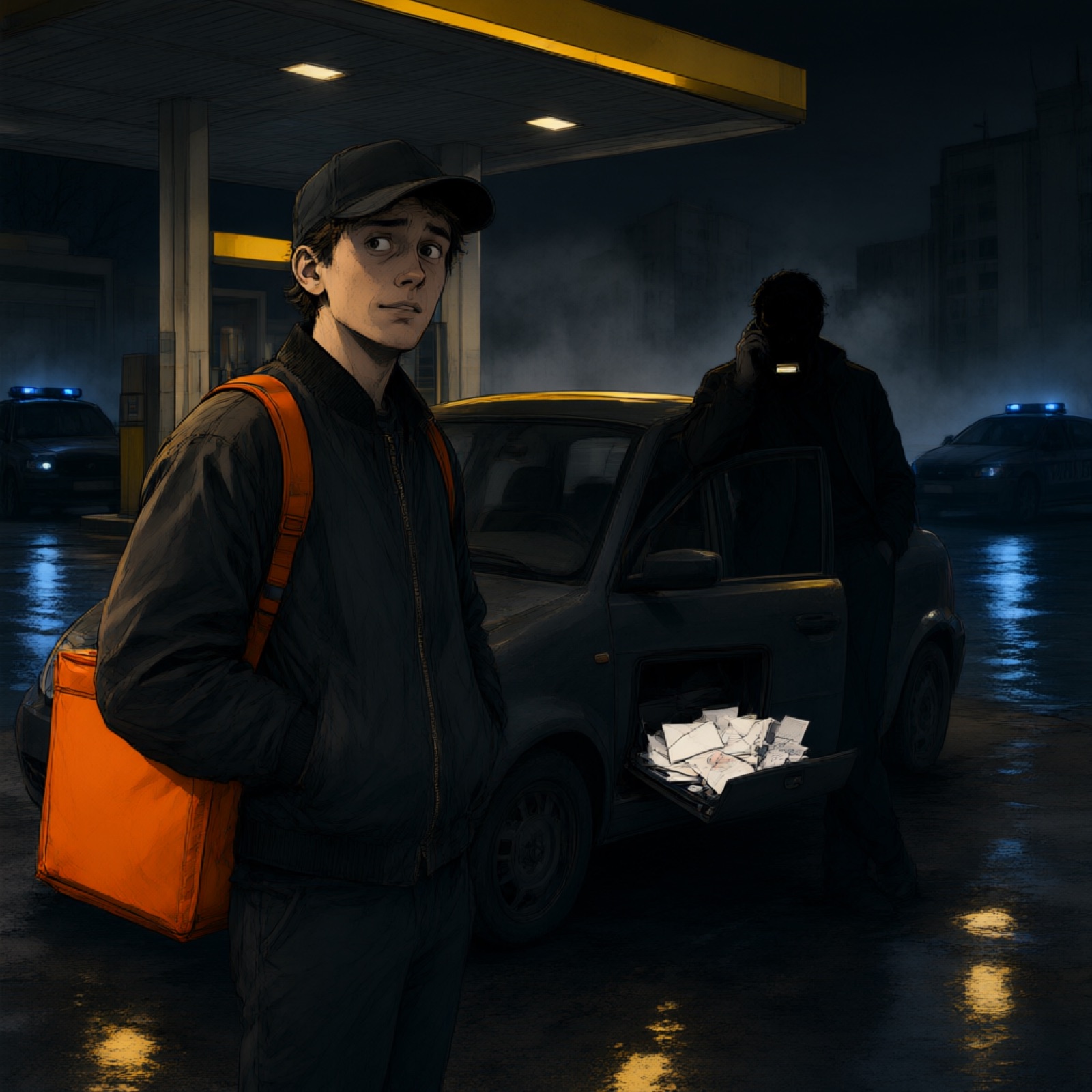
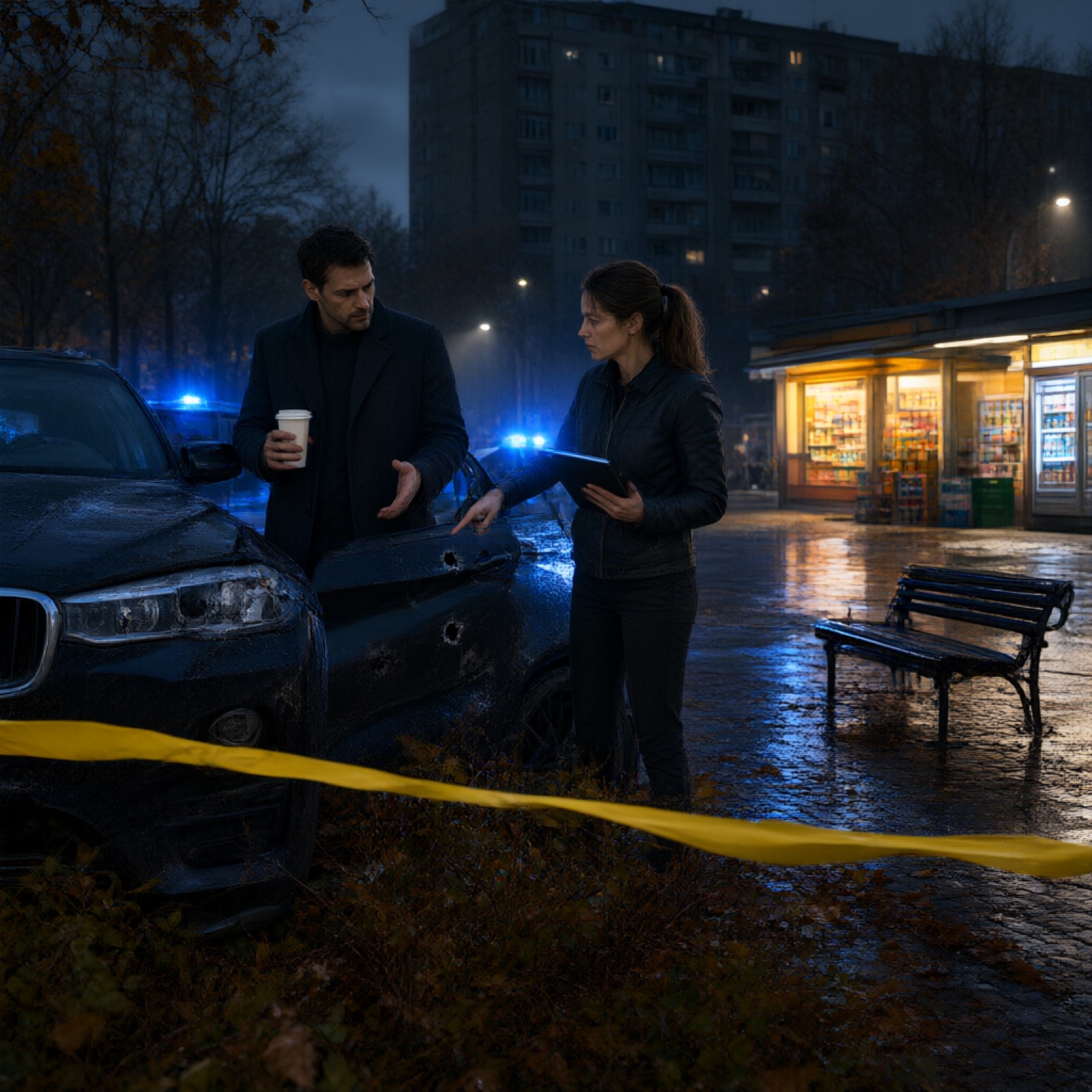
The petrol station on Seeburger Straße had only two guests at half past one in the morning: the young man leaning against a pump as if tyre pressure genuinely fascinated him, and the patrol car watching him with its sidelights on. Between them sat a dark Seat, parked sideways across the entrance, engine still warm, driver’s door open. Kalle pulled the Golf up behind it and took in the scene for a moment before getting out. “Street race,” he said. “Forged plates. Loaded pistol. And that’s only what they found before they opened the boot.”
“The boot’s shut,” said Leni.
“Then we open it.”
The young man was called Lukas Seiler, twenty years old, and he looked like he’d had different plans for the evening: black bomber jacket, a fresh shave, hands buried in his pockets. When Kalle walked up, he straightened, as if standing to attention were the only defence he could think of. “I was just driving,” he said. “I didn’t do anything to anyone.”
“The car’s got plates that belong to a Fiat from Woltersdorf,” said Kalle. “The pistol under the driver’s seat is loaded and unregistered. And in the glove compartment there’s advertising for a delivery service that doesn’t bring pizza. Tell me what ‘Kokstaxi’ is.”
Lukas glanced at Leni, as if expecting something different from her. Leni didn’t smile. “Let’s get in,” she said. “It’s cold. And you’ve got time.”
Inside the car it smelled of fast food and of that sweet scent that car air-fresheners don’t mask but only embrace. Leni turned the heating up. Lukas talked at first in the familiar half-sentences: seen nothing, known nothing, the car was borrowed. Kalle let him talk until he ran out of steam. Then he laid a forged plate on the dashboard.
“You’re twenty,” said Kalle. “That thing under the seat could have got you five years, if you were lucky. Now we’ve got you with a loaded gun, forged plates and a race against our lot. That’s not a fine any more, Lukas. That’s a file. And with a file, only one thing helps: someone bigger than you carries it.”
Lukas stared at the plate. “I didn’t want this,” he said quietly. “They said I just do a few runs, then the debt’s gone.”
“What debt?”
“My brother. He got on the books with them. Eighteen hundred euros. I was supposed to drive it off. Every run I do knocks something off.” He looked at Kalle. “I’m not a dealer. I’m a driver. I don’t even know what’s in the bags.”
“You do know,” said Leni calmly. “And the man who gives you the runs?”
Lukas hesitated. Then he said: “I only know him from the app. He never writes anything personal. He calls himself ‘Taxi’.”
At Pichelsberg S-Bahn station they found Rainer Scholz, a BVG security officer who took the job as seriously as someone paid to watch empty platforms at night without falling asleep. He’d watched the chase, he said, from the end of the platform where the steps lead down to Seeburger Straße. “A red Golf,” said Scholz. “Two people in it. The passenger wound the window down and threw something out. I remember thinking: nice evening to you too.”
“Red Golf,” Leni repeated, and wrote it down. “Two people.”
“And the passenger threw something?”
“A bag. White. Folded small. Should still be there, if the wind hasn’t got it.”
Kalle and Leni exchanged a look. Leni said nothing about the footage she’d already requested: the platform camera showed the Seat, dark grey, with a single driver. No passenger, no window, no throw. What Scholz had seen was probably another car, half an hour earlier – or a shadow in the neon light. But the direction was right, and so was the time, and the man had remembered that the driver had gone “like the devil” across the junction. Leni closed her notebook. “The officers will collect the bag,” she said. “And if you remember the colour exactly – you know where to find us.”
Scholz nodded eagerly. “Grey,” he said suddenly. “Now you ask – it was more of a dark grey.”
Leni smiled. Eighty percent. The rest you check against the camera, and the camera doesn’t lie, it only rarely errs.
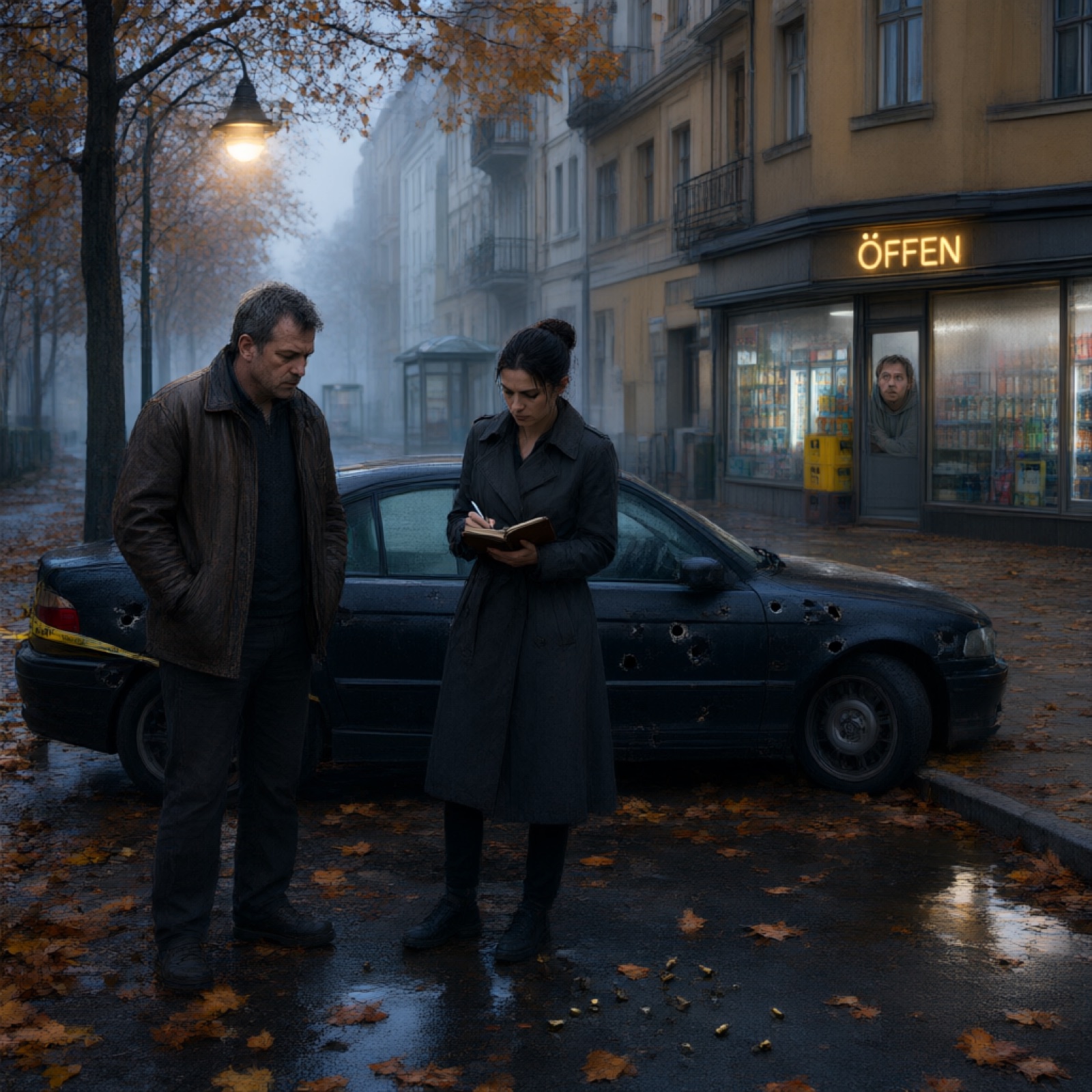
The late-night shop on Storchenbogen was known to everyone simply as “Hakan’s”, and Hakan was a man who held out behind his counter the way his fridge did: cold, but reliable, and full of things no one had ordered any more. When Kalle pushed the door open, the bell jangled and Hakan said, without looking up: “We’re closed.”
“Sure,” said Kalle. “And I’m the new parcel bloke. Put the coffee on, Hakan. We’re talking.”
Hakan sighed as if he’d been waiting for this evening ever since he first watched a Kokstaxi pull over at the kerb. “I don’t know what you’re on about,” he said, setting down two cups.
“Then I’ll tell you,” said Kalle. “Three months ago your nephew was caught with twenty-seven grams at the steps down to Zitadelle U-Bahn station. I left the file in the drawer back then because you said you’d sort it. Now you’re sorting it by covering for a delivery service that runs through your patch and calls on customers like coke was a bread roll. So: who’s ‘Taxi’?”
Hakan was quiet for a long time. Outside, a bus passed and the light swept over the shelves. “I’m no grass,” he said at last. “But my nephew’s smarter than your file. The ‘Taxi’ – that’s what a man calls himself who thinks he’s a businessman. He never drives himself. He’s got an app, called ‘Nachtküche’. You order on it, and a driver brings it. Like food, only different. The drivers are local lads with debts, or rent, or both. He sends them through the night like parcels. And when one of them goes down, it’s one parcel less.” He looked at Kalle. “That’s all I know. And now I’m tired.”
“So am I,” said Kalle. “But I won’t sleep until the ‘Taxi’ is off the road. You ring me when one of his drivers shows up at yours. And if you don’t ring me, I’ll have a word with the tax office about the second till under the counter. Good night, Hakan.”
While Kalle stood at the currywurst stand on Nauener Platz, slowly ruining the appetite of a runner who was eating his chips between two runs, Leni sat in the office in front of the screen. The “Nachtküche” app wasn’t in the public store – it ran off a link passed from phone to phone. Leni had got it via Lukas’s device, and what she saw was a delivery service that had made an effort to look like every other one: menu, delivery time, ratings. Except that under “this evening’s offers” there were no bowls, only weight classes, and the “delivery address” was rarely an address.
She worked through the registration data, the payment traces, the server that hung in a garage in Spandau and diligently kept its logs. By midnight she had a name. She called Kalle. “Toni Kowalski,” she said. “The app’s operator. Logs in as ‘Taxi’. The drivers call him ‘boss’, but he insists on ‘dispatcher’. He’s got his own fleet statistics, Kalle – mileage, runs, downtimes. The man keeps books on his drug drivers like a haulier on lorries.”
“A dispatcher,” said Kalle. “I’ve seen a lot of nutters, Leni, but one who runs his dealing runs like a haulage firm – that’s new. Where does he sit?”
“That’s the problem. His address is a shell company. But his app tells me where the next driver is heading. He’s doing one more run tonight – right across Spandau, final stop a workshop down by Wilhelmstadt. If we stop the driver, we’ve got the app. And with the app, we’ve got him.”
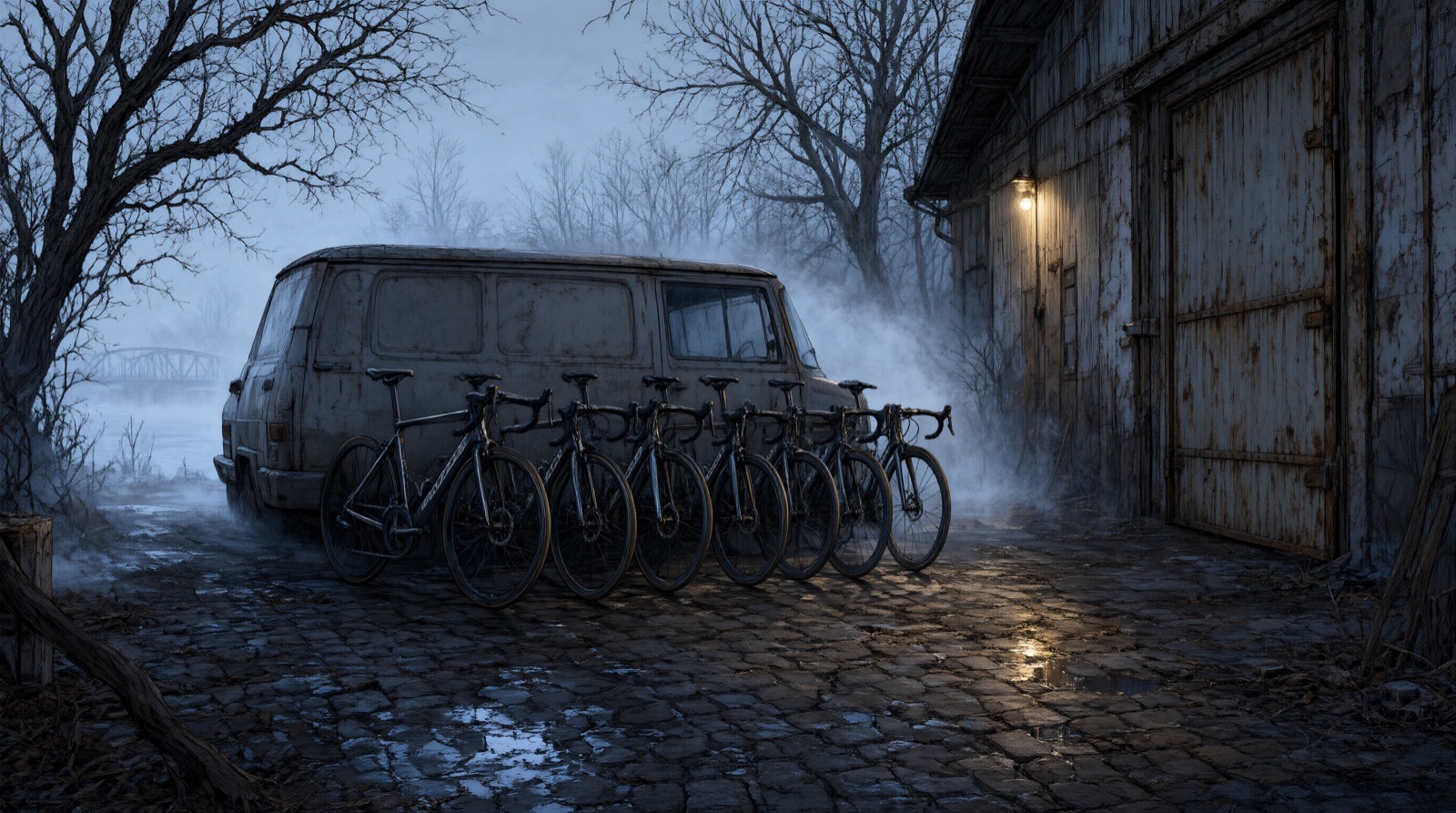
The workshop lay at the end of a street that looked as if someone had forgotten to switch the light on. The driver – a man of about thirty who looked as though he’d never been anywhere he was wanted – got out without raising his hands, and Kalle took the bag off him as if it were a parcel delivered to the wrong address. “Return to sender,” he said. “And from today, the sender’s no longer available.”
In the workshop office, between stacks of tyres and a calendar of naked tyres, sat Toni Kowalski in front of a laptop, looking up as if he’d expected a visitor, just not this one. He was slim, wore a freshly ironed shirt, and on the table stood two phones and a thermos flask. “Chief Inspector,” he said, “Chief Inspector. I’ve been hoping for this evening. Finally someone who understands what I’m building here.”
“Kowalski,” said Kalle, “you run a cocaine delivery service with twenty-year-old drivers working off your debts. That’s not a company. That’s a system that eats young people.”
“I’m a dispatcher,” said Kowalski. “I organise logistics. What my drivers transport is none of my business. I’ve got contracts, route plans, insurance – all right, the insurance is still missing. But look for yourself: my failure rate is under ten percent. Even the post office can’t manage that.” He smiled. “I deliver what’s ordered. Whoever orders, decides. Ask the customers.”
“We will ask the customers,” said Leni, laying a printout on the table. “The app, the server, the payment traces, the driver chats. And the statement of Lukas Seiler, who says you blackmailed him with his brother’s debt. Never mind the plates and the pistol in his car – you got him those so he’d drive faster and keep quiet if it came to it.”
Kowalski’s smile held for a moment, then fell away, like a lamp being switched off. “The boy’s nervous,” he said. “He’s misunderstood everything. I run a courier service for all sorts of things. That individual drivers – let’s say – overdo it, I can’t check that every night.”
“Yes, you can,” said Kalle. “You keep books on every kilometre. And we’ve got the books now. The workshop’s surrounded, your phones are seized, and outside your driver’s just told us the bag was from you. Let’s carry on the shift, Kowalski. But this time we all ride together.”
As they led him out, Kowalski stopped at the door and turned, like a man who’d forgotten something important. “You know,” he said, “in a few years the whole of Berlin will order this way. Food, drugs, happiness. The only one who loses is the one who’s too late.”
“The only one who loses,” said Kalle, “is the one who sends a twenty-year-old driver out with a loaded gun while he sits warm with a thermos. Finish your run, dispatcher. Last stop is a cell in Moabit.”
In the early morning Kalle and Leni sat in the office, the city outside slowly turning blue, the coffee long cold. Leni had sorted the file: Lukas Seiler, testifying as a key witness, his debt to the “Taxi” struck off because he’d voluntarily handed everything over; Rainer Scholz, whose statement was eighty percent right and whose remainder was corrected by the station camera; Hakan, who’d only talked when they’d come at him with the second till, and who now pretended he’d never been asked. And Toni Kowalski, the dispatcher who’d run his rounds like a haulier and had, in the end, been undone by precisely that bookkeeping.
“The boy was lucky,” said Leni. “Two more runs and he’d have needed the pistol. Or the court.”
“Luck,” said Kalle, “is a word for people who don’t have to stand at a petrol station at half past one. He talked. That’s more than luck.” He drank the cold coffee. “And the ‘Taxi’? He’ll be out in ten years telling everyone he only did logistics. Until then we’ll deliver the answer why logistics isn’t the same as a licence to deal.”
“Good job tonight,” said Leni.
Kalle nodded. That was all.
Note: All characters, places and events in this story are fictional. It was inspired by a public police report but does not depict real events, persons or circumstances. More: Legal notice.