The Night at the Schlesi
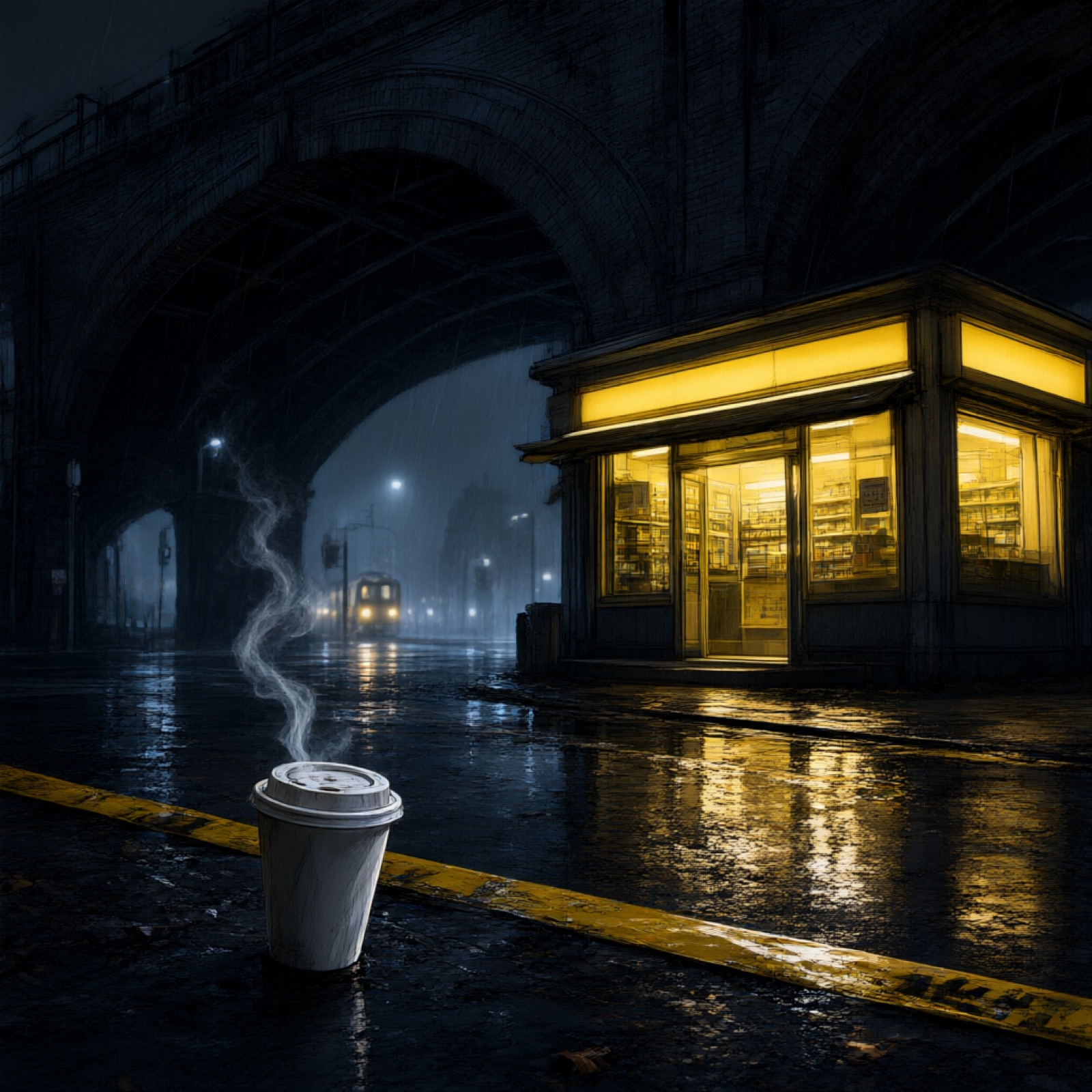
The asphalt was gleaming. Not from rain — from that fine November drizzle that falls for hours without you really noticing it. Kalle pulled his jacket collar up. Half four in the morning. The club district around the Schlesi lay in that odd half-sleep between the last party-goers stumbling home and the first rubbish truck that would collect the empty bottles around six.
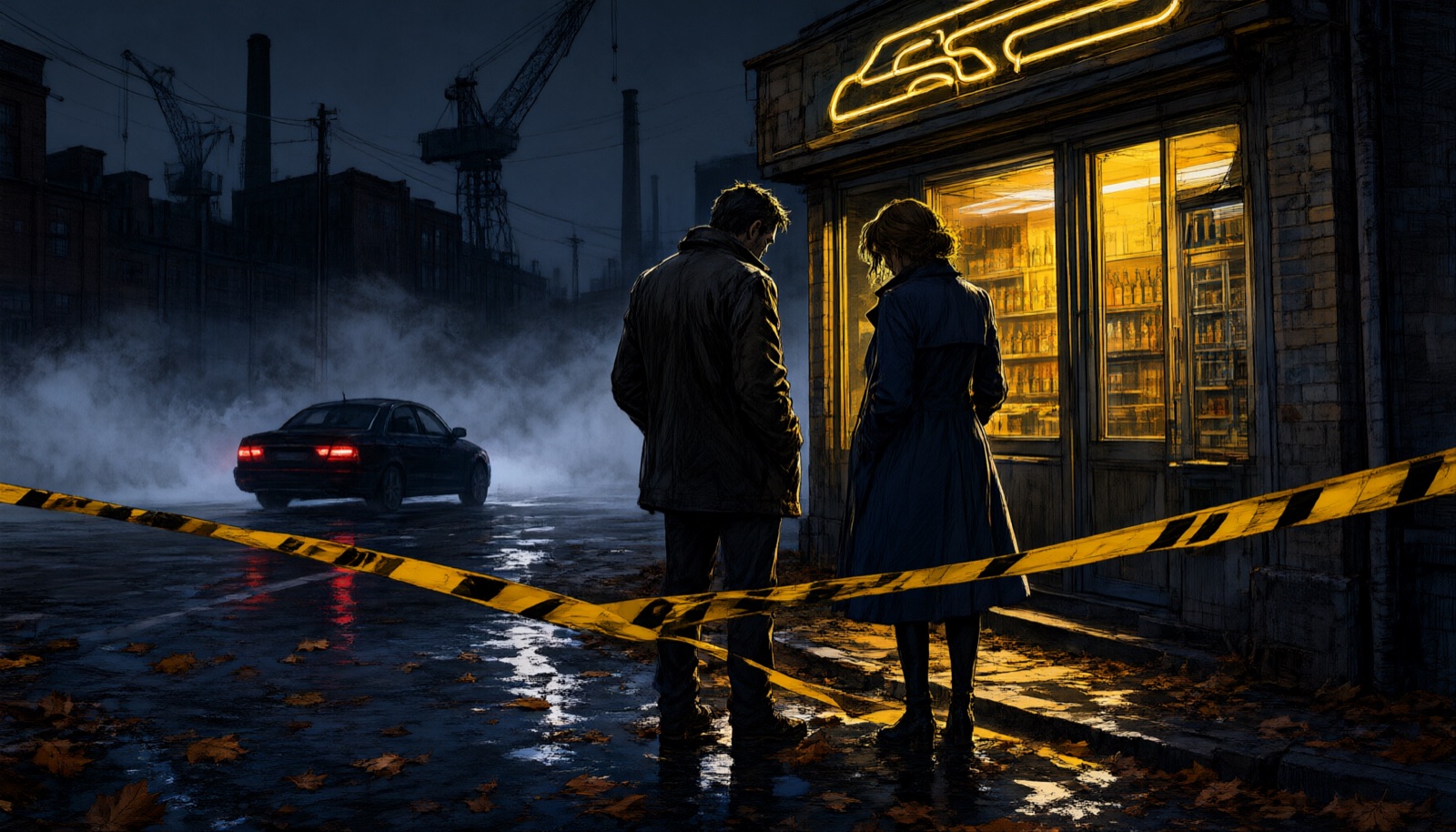
The tape fluttered in the wind. A patrol car sat at an angle, blue lights off. Behind it stood two paramedics smoking, though that had been banned on the premises for years. The uniformed officer, young, maybe twenty-four, pointed at the pavement.
“Male, twenty-eight, multiple lacerations to the torso and left hand. Passer-by found him twenty minutes ago. Conscious when the ambulance arrived.”
“Suspect?”
“No one saw anything. Victim says a man asked him for a cigarette. Then for a euro for a beer. When he refused — stabbed.”
Leni knelt beside the blood traces. She wore thin blue latex gloves. “Defensive wound on the hand. He tried to block the blade. Then came the rest.”
Kalle looked towards the U-Bahn bridge. The tracks lay still. Somewhere in the distance a door slammed. “Right. What we got?”
“Night,” corrected Leni. “It’s still night.”
“For us it’s the day.”
The paramedic, a woman with short hair and a bag that looked like it might spring open any second, stepped out of the ambulance. “He’s stable. Cut on the left hand, three on the torso, one on the back. Not life-threatening, but he’s losing blood. We’re taking him to UKB.”
“Can he talk?” asked Leni.
“A sentence. Then he passed out. If you’re lucky, tomorrow morning.”
Kalle nodded. “Then we go tomorrow morning.”
Across the road sat a corner shop. The neon tube above the door had burned too bright for years, the yellow drifting into greenish. Behind the counter stood Murat, mid-fifties, a T-shirt that had once been black. He was smoking and pretending to read the paper.
Kalle walked over. Leni followed, three paces behind.
“Murat.”
“Chief inspector.” Murat let the paper drop. “I weren’t here. Didn’t see nothing.”
“You’re here. The door’s open. And you see everything.” Kalle leaned on the counter. “Man, twenty-eight, stabbed on the other side of the street not quite an hour ago. You’ve got a window. You’ve got eyes.”
Murat shrugged. “Might be someone was hanging about. Asked for a beer. Told him I don’t sell alcohol to people who reek of spirits from twenty metres off. He cursed and left.”
“What did he look like?”
“Thirty, maybe thirty-five. Stubble, not the fashionable kind. Jacket, dark, patch on the sleeve. Had that look. You know it when someone doesn’t know where to spend the night.”
“Does he come round here?”
“Don’t know him personal.” Murat stubbed his cigarette in an overflowing ashtray. “But the kids call him Blade-Kai. Because of the knife he always carries. Or the tattoo. Or both.”
“Where’d you hear the name?”
“Because he was here two weeks ago. Nicked a bottle of vodka. I didn’t report it — just a bottle. But he said: ‘Blade-Kai takes what he wants.’ That sort.”
Kalle nodded slowly. “Good work,” he said to Leni, without looking at Murat. Leni made notes.
“I was never here,” said Murat.
“Sure,” said Kalle. “Like always.”
The radio beeped as they were walking back to the patrol car. Second incident, four streets away. Another knife. Another young man.
“Two in one night,” said Leni in the car. “Same area. Same type?”
“Or a few mates having a bet who can stick more people.” Kalle turned the key. “What a city.”
The second location lay behind a club whose name changed every week. This week it was called “Orion”. The entrance was a black hole between two peeling pillars. On the floor lay cigarette butts and a broken high heel. The door stood open, bass thumped inside, but only half as loud as it had been at three.
The second victim was twenty-two, slim, his shirt torn at the side. He sat on an upturned crate and held a plaster to his cheek, though the wound on his arm looked worse. A paramedic bent over him.
“Can he talk?” asked Leni.
“Briefly,” said the doctor. “He’s in shock, but conscious.”
The lad looked up. His eyes were too large for his face. “He wanted money. For a beer. Told him I had no change. Then he said I should get my phone out. Told him I’d call the police. Then he pulled it. It was so quick.”
“Description?”
“Dark jacket. Patch on the sleeve. Ran like he’d run before. A funny sort of limp. And… he smelled of rotgut. Not beer. The cheap stuff from the supermarket.”
“Had you seen him before?”
“Never. Just stood there. Like he’d been waiting for me.”
Leni wrote it down. Kalle looked around. The club bouncer leaned against the wall, arms crossed. A man broad as a fridge, shaved head, earring in the left ear.
“You saw something,” said Kalle. Not a question.
“Might have,” said the bouncer. “I don’t let anyone in who stinks of booze. He was hanging about outside. Asked a woman for a fag. She ignored him. Then he went over to that lad there.”
“Limp?”
“Slight. Left leg. Like something wrong with the hip.”
“Tattoo?”
“On the neck. Looked like a blade or a cross. Not professional. More like done in prison or in a drunk stupor.”
“When did he leave?”
“When the kid started screaming. Ran off towards Warschauer. Fast for a limper.”
“Had you seen him before?”
“Maybe. Maybe not. Fifty people ask for fags and change here every night. Most do nothing. One or two do.”
Kalle nodded. “Cheers.”
“I’ve got work here,” said the bouncer, straightening his jacket. “Not for the Old Bill.”
“So do we,” said Kalle.
They found Nico at a kebab shop on Warschauer Straße. Nico was in his late thirties, wiry, eye bags like souvenirs from ten years of night shifts. He was eating a döner and pretending not to recognise Kalle.
Kalle sat opposite him. Leni stayed standing, blocking the exit.
“Nico.”
“Chief inspector. Am I not safe here?”
“You’re never safe. But today you’re useful.” Kalle didn’t take the döner, but he examined it. “Blade-Kai. Kai Nowak. Where’s he kipping?”
Nico chewed slower. “You dug out the old favours catalogue again?”
“No. We’ve got two victims with knife wounds. One’s twenty-eight, the other’s twenty-two. Both refused to buy him a drink or give him money. Both got stabbed. If you say you know nothing now, I’m taking you in for aiding and abetting.”
Nico swallowed. “Blimey, Kalle. That’s not what I meant.”
“What did you mean?”
“Kai… he’s just a pisshead with a blade. Kips at a mate’s near Ostkreuz station. Couch in the kitchen. But he’s mostly not there. He drifts about.”
“Where exactly?”
“Don’t know. But around half six he’s always at that kiosk on the corner of Revaler and… uh, Eldenaer. Asks for leftover booze and fags.”
“Why half six?”
“Because that’s when the kiosk man comes and throws away the previous day’s leftovers. Kai takes what he gets.”
Kalle stood up. “Right.”
“I was never here,” said Nico.
“They all say that.”
It was shortly after half six when they found the kiosk. The neon tube flickered. Behind the building lay a small playground, fenced in, two swings, a slide. On a bench lay a man under a dirty wool blanket. Next to the bench stood an empty bottle of paprika-flavoured vodka.
Kalle stopped three metres away. Leni circled the bench from the other side.
“Kai Nowak,” said Kalle. “Get up. Slowly.”
The blanket twitched. A head emerged. Unshaven, red eyes, hair sticking out in all directions. “What? I’m sleeping here. What do you want?”
“Police. Get up.”
Nowak sat up. He wore the same dark jacket, the patch on the sleeve was a worn logo of a metal band. On his neck, where the collar had fallen open, was the blade tattoo the bouncer had described: blue-inked, crooked, nothing professional. He smelled of alcohol and sweat. “I didn’t do nothing.”
“Two young men injured last night,” said Leni. “Asked for alcohol. Then attacked. With a knife. Your description matches.”
Nowak laughed, but it sounded like coughing. “They looked at me. Like I was dirt. Just because I wanted a euro.”
“You stabbed them.”
“I defended myself!”
“Against a man who refused?” Kalle stepped closer. “Open the jacket. Slowly.”
Nowak hesitated. His hands trembled. Then he opened the jacket. In the inside pocket sat a folding knife. The blade was about twelve centimetres, the tip broken. On the handle stuck something that looked like dried blood.
“That’s just for work,” said Nowak.
“What work?”
“Everything. You never know who you meet on the street.”
“Turn around. Hands behind your back.”
Nowak turned around. He was smaller than expected, the limp obvious when he walked. Leni put the handcuffs on. They clicked.
“I want a solicitor,” said Nowak.
“You’ll get one,” said Kalle. “But first the ride.”
At the station, two hours later. Nowak sat in a cell, sleeping off the booze. Kalle and Leni sat at their desks, papers stacking up. On Kalle’s monitor an email blinked: Forensics had confirmed two traces of other men’s blood on the handle, and the break at the tip matched the cuts. The comparison with both victims’ blood samples was still running. Leni was typing into a database, the search terms were “knife”, “alcohol”, “lacerations” and “Friedrichshain”. The hit list was long, but nothing matched exactly.
“If there are more,” said Leni, “we’ll find them.”
“Or he’ll take a break,” said Kalle. “No booze on tap inside.”
Detective Chief Inspector Brandt came out of her office. She wore the same grey blazer as always, the glasses sitting a shade too low on her nose.
“Rieger. Weber. Report.”
“Kai Nowak, thirty-five, no fixed address,” said Leni. “Two victims in one night. Motive: alcohol and rage. Weapon: folding knife, twelve centimetres, two traces of other men’s blood on the handle, comparison with both victims’ samples pending. The break at the tip matches the cuts. Victim two described the attacker, the bouncer gave us the limp and the tattoo, Murat the jacket with the patch. Patch, limp and tattoo confirmed at the arrest. Victim one hasn’t been interviewed yet — the paramedic won’t let us near him till tomorrow morning.”
“Third victim?”
“None known. But we’re checking the last three months in Friedrichshain and Kreuzberg. Same pattern: begging for booze, then violence. Maybe there are more.”
Brandt nodded curtly. “Good. You’ve got him.”
“Could’ve been worse,” said Kalle. “He asks for a drink. If someone says yes, maybe nothing happens. But two noes and he stuck them.”
“He’s a pattern,” said Leni. “Not planned. Impulsive. But the knife is always there.”
Brandt took off her glasses, polished them on the hem of her blazer, put them back on. “Then you’ll check the knife and the patterns. Good job today.”
She left. Kalle leaned back and checked the clock. Half eight. The coffee on his desk had been sitting there for an hour. He took a sip. Cold. As always.
“The coffee’s cold,” said Leni.
“I know.” He drank it anyway. “But it’s here. And the next machine’s three floors down.”
Leni smiled barely perceptibly. “Then it stays cold.”
Outside, at the Schlesi, the day was beginning. The clubs closed, the first U-Bahn trains rolled in, and somewhere in Friedrichshain a corner shop owner emptied an ashtray and thought nothing more of it.
Note: All persons, places, and events in this story are fictional. It is inspired by a public police report but does not depict any real events, persons, or circumstances. Further information: Legal Notice.