Shots on Hofwiesen
The phone rang at 3:41 AM and Kalle knew the night was over.
He’d been sat on his sofa since midnight, jacket still on, shoes still on, last night’s coffee in his hand, stone cold because he’d forgotten about it. At 3:52 Leni sent a message consisting of a single word: Hofwiesen. Two minutes later her motor was idling downstairs.
“Shots,” she said as he got in. “Outside a restaurant. A waiter’s down on the street. Three casings on the asphalt. Dark BMW gone.”
“What d’you mean dark? Dark like a motor no one saw, or dark like a colour that ain’t in no brochure?”
“Dark like a witness statement.”
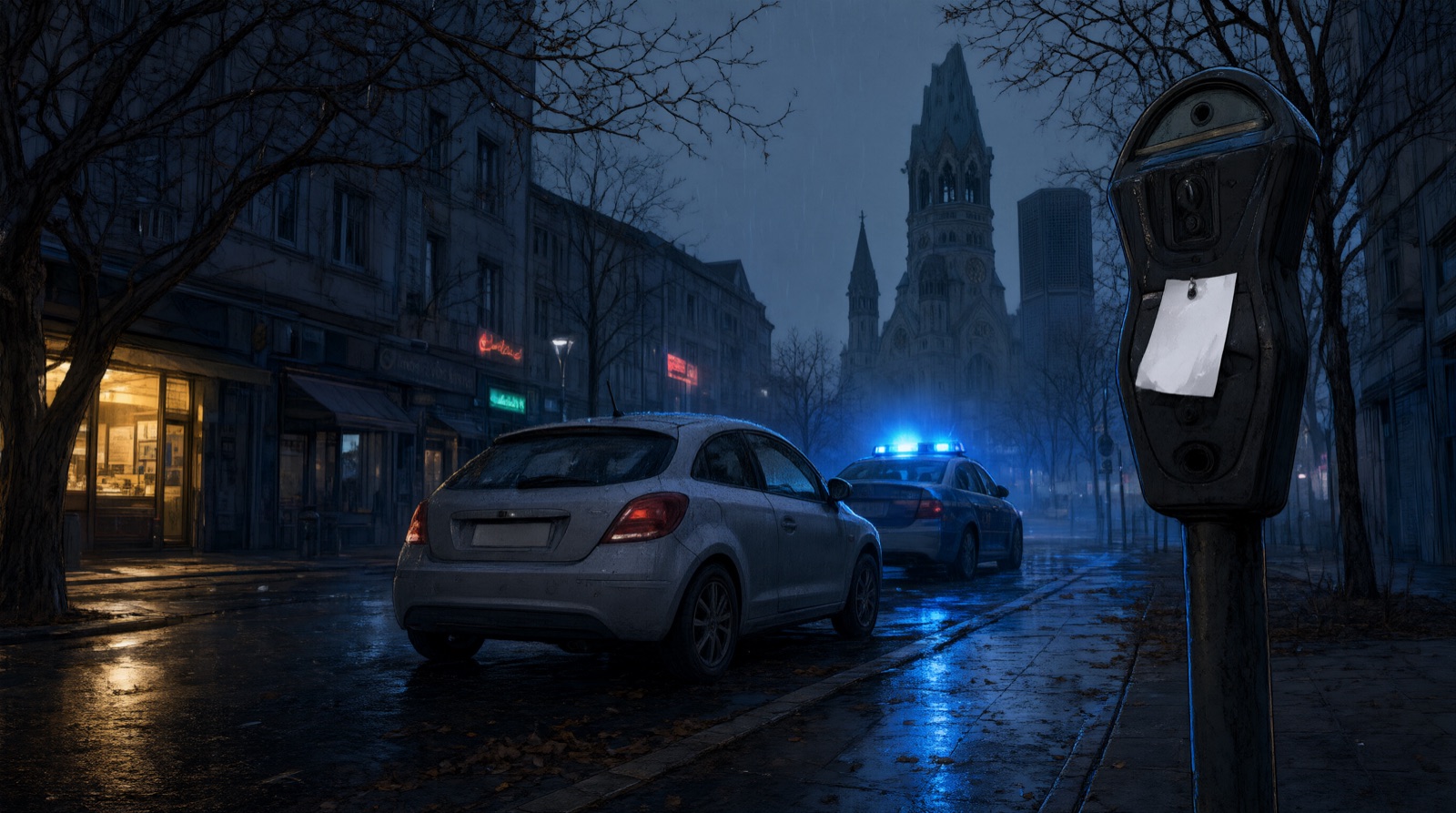
The Hofwiesen at four in the morning is a street that ain’t made its mind up yet. Pre-war buildings with tall windows, a bicycle chained to a tree since summer, and outside the Goldregen restaurant two squad cars with their blue lights running on standby because someone at headquarters decided light calms people down. It calms no one. Just paints the cobbles blue.
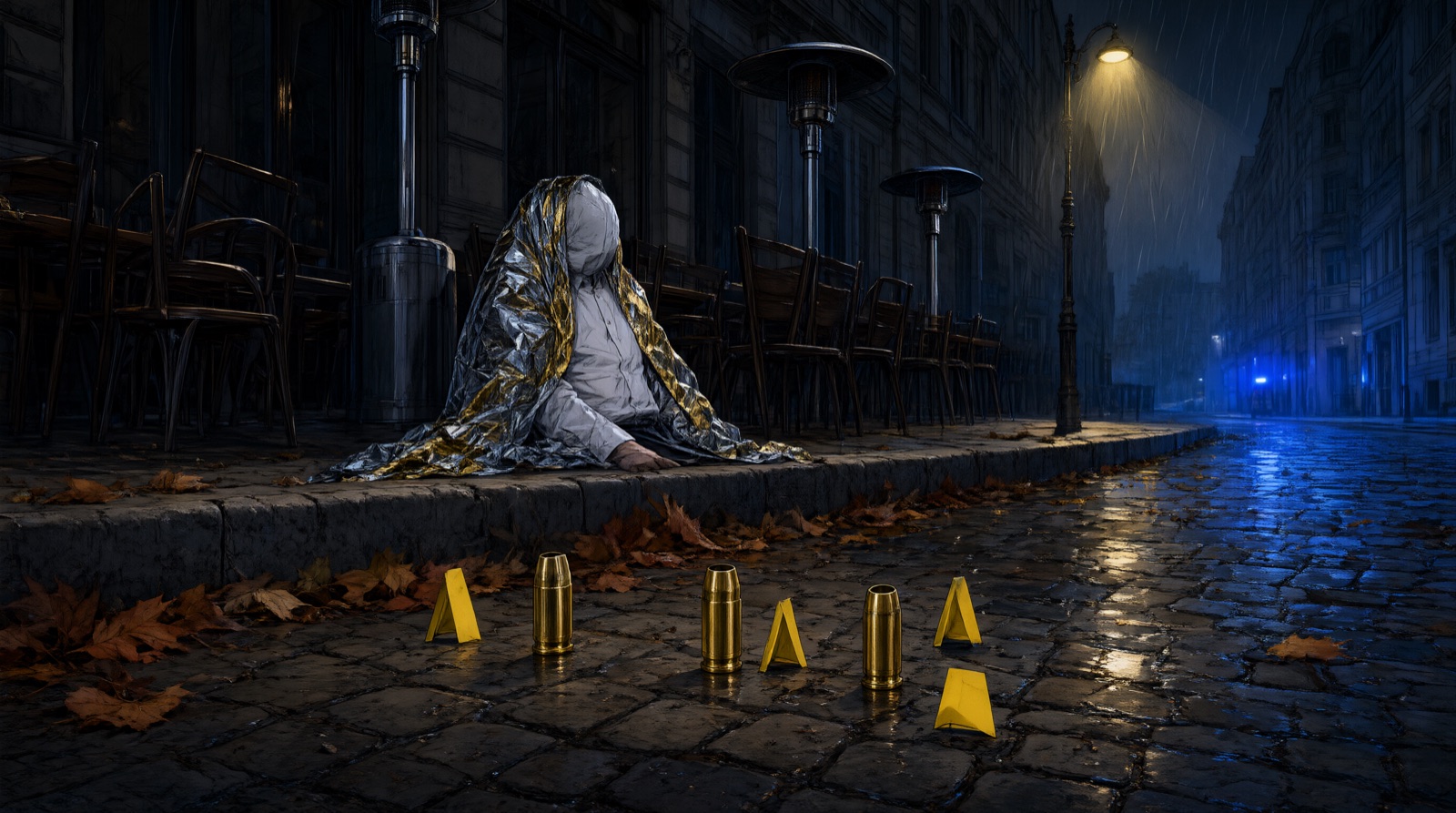
The waiter sat on the kerb, emergency blanket round his shoulders, face half dark red. In front of him on the asphalt, marked with little yellow flags, three brass casings. Behind him the terrace of the Goldregen, chairs stacked, heaters off, gold letters above the door dull from the drizzle. In the middle of the road, three metres from the kerb, a clump of wet autumn leaves that the wheels of a departing car had carried to the other side.
Kalle stood next to Leni, hands in jacket pockets, taking it all in like a weather report.
“Clan,” he said.
“Jealousy,” said Leni.
“You ain’t seen the bloke yet.”
“Neither have you.”
“I’ve seen the casings.”
“I ain’t seen the waitress yet,” said Leni. “But I know how this looks. A guest gets loud. A bloke turns up late. A waiter gets in the way. Three casings fired into the air because someone wanted to show off and couldn’t aim. That ain’t structure, Kalle. That’s a domestic with a piece.”
“A domestic don’t shoot nine millimetre.”
Leni looked at him. “That was almost an argument. I’m nearly impressed.”
The waiter was called Robert Lindner, twenty-nine, bleeding onto his work trousers, which seemed to annoy him more than his nose. He talked straight away, no pushing needed.
“Table seven,” he said. “The guest came at half past twelve, alone, coat and this signet ring. He had the tasting menu, all seven courses, and a bottle of Barolo, the dearest on the card. Didn’t finish it. Anyone who does that is planning something.”
“And then?” asked Leni.
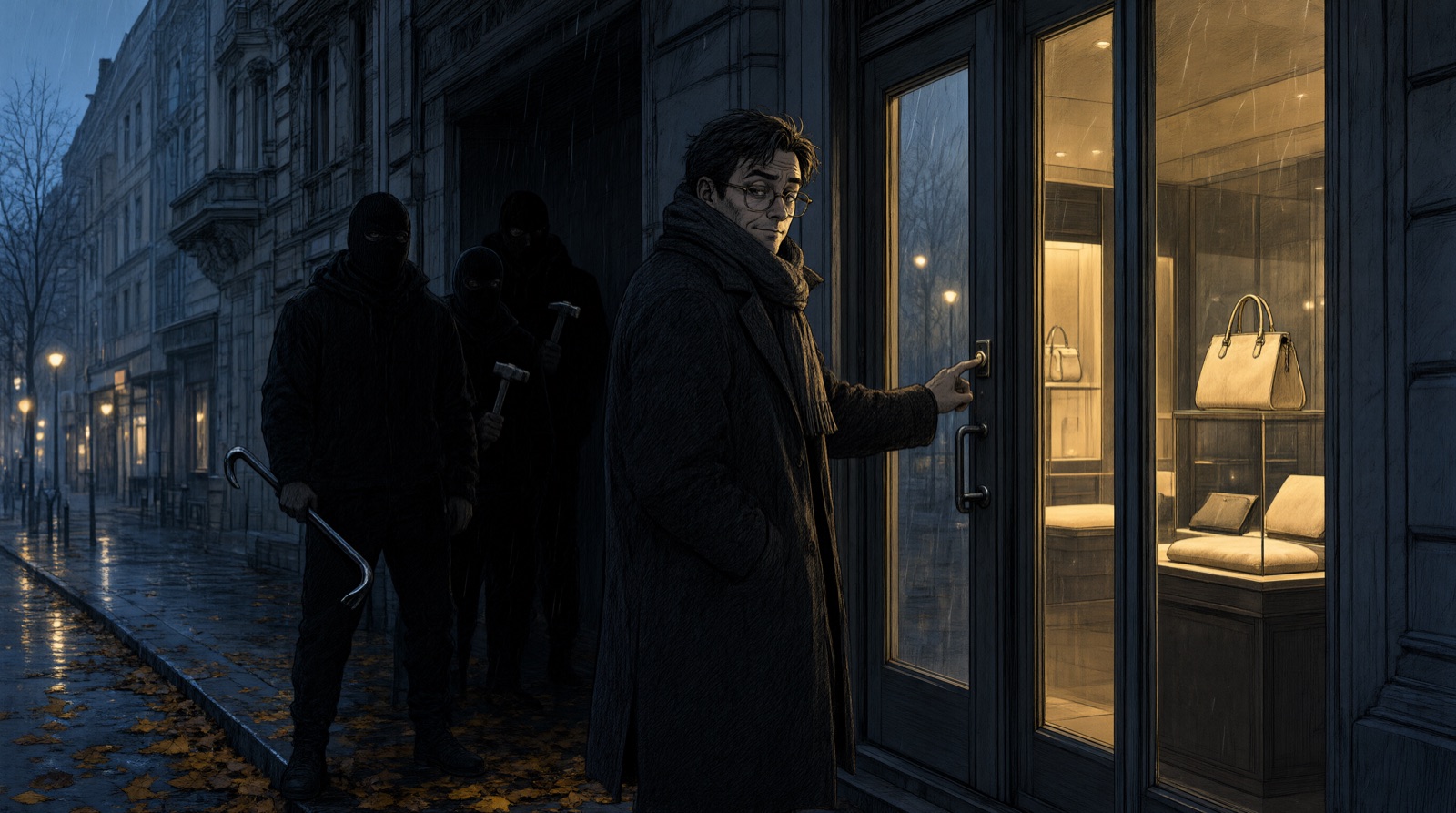
“Then it emptied out. By three only a couple left besides him, and they wanted to pay. Then two blokes came in through the terrace door, not the entrance. One had a small folded umbrella. Three twenty. In this weather.”
“Did they say anything?”
“The one with the ring told me to bring the bill and then go out for a smoke. So I brought the bill. Forty-eight euros tip, cash, on the plate. That was the first thing that felt off. And I went out because I’m not stupid.”
Kalle nodded slowly. “And outside?”
“They were standing there,” said Robert. “The umbrella was in the other one’s hand now. And the first one, the one who’d asked, was still polite. The second wasn’t. He wanted to know where Berti lives. Where Berti parks his motor. And how to get into our cellar. Which you can only do with a key, he apparently didn’t know.”
“And what did you say?”
“That I don’t know. Because I don’t know.” Robert shrugged and winced, his shoulder hurting. “Then he hit me in the nose with the grip. Not the barrel. With the grip. I’ve thought about it a lot. With the grip you hit, with the barrel you threaten. With the barrel you threaten people you’ll see again.”
Leni wasn’t writing. She just held the silence, which with witnesses often works better than any question. After a bit Robert said:
“Then they went to the motor. And one fired three times. Not at me. Beside me. In the air, over the road, into the awning of the café opposite. And one shouted: Tell Berti the night porter’s clocked off. Then they were gone, someone got a towel, and then you lot turned up.”
Kalle looked at the casings. “Beside you. In the air. That’s a difference, innit?”
“That’s the difference,” said Robert, “between a threat and a murder.”
Berthold Kranz, owner of the Goldregen, stood in the terrace doorway twelve minutes later, in cashmere, with the face of a man who turned twelve grand yesterday and wants to ring a solicitor today. He straightened a chair.
“Not a word to the press,” he said. “Not a word. I’ve got eighteen staff. They need their money in December, not their principles.”
“Mr Kranz,” said Leni. “Your waiter’s got a broken nose.”
“And I’ll pay the insurance for it. I just don’t want the word protection money in an article a week later. Because then the next bill won’t come from the press.”
Kalle leaned on the terrace rail and looked at the awning of the café opposite. Three holes, clean, light-rimmed because the drizzle had washed the dust out.
“Three weeks ago,” he said, “a bloke was at yours. Definitely not the one with the ring?”
Kranz was silent five seconds, which is a lot.
“Three weeks ago two blokes were here,” he said then. “With a folder. Very polite. A care contract. Twenty-four hundred a month. For nothing to happen.”
“And?”
“I said I’ve got insurance. An alarm. A door. I don’t need care, I need a coffee machine that don’t switch off after twenty minutes.”
“Do you know the bloke?”
“He said I don’t need to know his name.” Kranz straightened the second chair. “And he was right. I didn’t ask.”
Leni was meanwhile pacing the terrace, steps measured, head tilted, which to colleagues always looks like a daft idea and never is.
“Kalle.”
“Yeah?”
“The casings are in front of the kerb. Here, here and here.” She walked three steps. “The holes in the awning are over there, eighteen metres as the crow flies. A standing shooter couldn’t have hit the awning from where the casings are. He fired from a moving car, over his shoulder backwards. That’s the worst way to deliver a threat. He didn’t want to show where he stood. He wanted to show how easy it would be for him.”
“But he fired in the air.”
“He fired in the air because he don’t want a man dead,” said Leni. “He wants a man to pay. That ain’t clan culture, Kalle. That’s an invoice with interest.”
Kalle looked at her sideways. “You said jealousy.”
“I said jealousy for starters.” She picked up a yellow flag and put it back. “Maybe more comes later. I ain’t ready to apologise to you yet.”
In the staff room of the Goldregen sat Sandra Behrend, thirty-two, waitress for five years, at a table where they usually roll cutlery. She still had her jacket on and a fag in her hand she wasn’t lighting because of the smoke alarm above the table.
“Robert’s alright, ain’t he?” she said before anyone asked. “I mean, a black eye and the nose. But nothing serious.”
“Ms Behrend,” said Leni. “Talk us through the night. From the start. We’ve got time.”
Sandra looked at the fag. “Half eleven was rammed. One was half full. Three was one guest. And then Enrico turned up.”
“Enrico?”
“Enrico Sawatzki. My ex. Since July ex.” She rolled the fag. “He rang at ten past three. He’s round the corner, he just wants a chat. And then he was outside talking like someone who already knows something’s about to kick off. Then I heard a motor. And then he shouted.”
“What did he shout?”
Sandra breathed out. “He said: I’ll get the bastard. And then he legged it.”
“He ran after the motor?”
“He ran after the motor.” She looked up. “And I stood there, phone in hand, and then Robert came round the corner with his face.”
Leni gave her time. Witnesses are eighty percent reliable, that ain’t a statistic, that’s daily bread. The question ain’t whether they lie. The question’s which sentence they leave out.
“Ms Behrend,” she said. “What’s missing from this night?”
Sandra fiddled with the fag. “The BMW,” she said. “It had a dent in the door. Driver’s side. I saw it as it pulled away.”
The camera above the door of the Café Verna on Kantstraße hadn’t been touched since 2019 and recorded that night as the only witness without memory gaps.
3:44 AM. The dark motor stops in the second lane. A bloke in a dark jacket runs in from the left, grabs the driver’s door handle and kicks it. The door gives. Then two kicks against the rear wing, like the road’s a punchbag, and a phone in his fist he shoves in his jacket pocket as the motor pulls away.
3:52 AM, Grolmanstraße. A resident reports a bloke slashing tyres on a Mercedes. It’s Enrico Sawatzki. He denies nothing, sits in the yard, carpet knife still in his jacket pocket, and says the sentence that falls multiple times that morning: “I thought it was his motor.”
He’d got the wrong motor. The Mercedes belonged to Dr. Albrecht Nolte, dentist in Charlottenburg, the quietest man in the street at four fifty.
And Sawatzki, who had nothing to do with the ring man, had taken something that wasn’t his: a phone from the back seat. That wasn’t his mistake. That was the others’ mistake.
Chief Inspector Schneeweiß from the LKA rings back at half six and needs seven minutes for two sentences that change the day.
“Nine millimetre. Three casings, one weapon. Primer and extractor marks match a seizure set from September.” He clears his throat. “That was the Wilmersdorf case. The weapon wasn’t there then, it turned up later in the environment. Means: it hit the market. Someone bought it, and the sale don’t go over the shop counter.”
“And where was it before?”
“In a gun cabinet. In a firm. I’ll send you the number.”
Six thirty-five, corner shop on the corner to Goethestraße. Jurek Malinowski’s stood behind the same counter for twenty-seven years selling coffee, fags, currywurst from a warmer he respects himself, and papers no one buys.
“Jurek.”
“Kalle.”
“Second till.”
“The second till’s dead. Don’t work.”
“Jurek, the second till works, and the bloke who counts it sells duty-free fags in your back room. You know we know. And you know I won’t put it in the report if you give me two minutes and chuck in a currywurst.”
Jurek looked at him three seconds, three seconds longer than usual. Then he put down a paper plate and took the lid off the warmer, which sounded like an occasion.
“The fat one was here tonight,” he said. “Ten to four. Fags, gum, a water. Not even a beer. And he paced the shop like it was too small for him.”
Kalle looked up. “The fat one?”
“The one with the jacket under the coat,” said Jurek. “The one with the beard and the thing over his eye. Don’t play dumb, you know who it is. The one from security. And he’s been standing by the papers for eight minutes waiting for you to finish.”
Kalle turned slowly.
Between the fag shelf and the fridge with the energy drinks stood Mike Kowalski, forty-seven, a head taller than the fridge, black wool coat, white shirt, no tie because ties work for bent salesmen.
“Chief Inspector,” he said. “I heard you talking. You talk a lot. Good for the Kiez. Not good for a chat with me.”
Kalle took the paper plate. “What d’you want?”
“I want a coffee and a gum. And I want to tell you something that costs me nothing and is worth something to you.” Kowalski pushed a box of blackcurrant fags across the counter, which Kalle took for a character flaw. “Two conditions. One: you believe nothing I can’t prove. Two: you pay for the currywurst.”
“You’re standing here wanting to sell me something for a currywurst?”
“No,” said Kowalski. “I want to tell you something for a currywurst. Selling would be if I took it back later.”
He talked smooth, proper, pauses in the right places.
“That wasn’t my firm,” he said. “My lot don’t drive BMWs. My lot drive cabs and stand on doors. The BMW belongs to a firm that sells contracts I don’t sell. Care for gastronomy. Half price, double staff. You can ask in Sonnenallee. Marchetti Gastro. Danylo Marchenko. In the commercial register, that sort of thing costs nothing.”
“And why tell me?”
“Because the bloke’s been poaching my customers since September. Two locals. And since September shots have been fired at my doors.” Kowalski took the fag box back, turned it between his fingers. “Every restaurateur in this city is scared. Fear’s the best business going. You just gotta find the price. He finds it. And when he talks, he talks about a night porter. The night porter’s clocked off. Tell that to Kranz. He deserves to know.”
Kalle looked at him a while.
“So you’re selling me an invoice I settle for you.”
“You settle it with a currywurst. I’m not invoicing nothing.”
“And your bullets?”
Kowalski looked at him, and for half a second something rare was in his face.
“I ain’t got no bullets left,” he said. “I had a firm and a room with a gun cabinet. The gun cabinet’s history. I ain’t the bloke who sells bullets. But I’m the bloke who knows that in Grolmanstraße tonight a dentist stands without tyres because someone took his rage out on a Mercedes. I ain’t stupid.”
“You’re the bloke with the eye.”
“That’s a beard, Kalle.”
Leni was meanwhile reading a commercial register.
Marchetti Gastro & Service GmbH. Trade: security and care concepts for gastronomy. Managing director: Danylo Marchenko, 38. Three employees with priors, two for GBH, one under the Weapons Act.
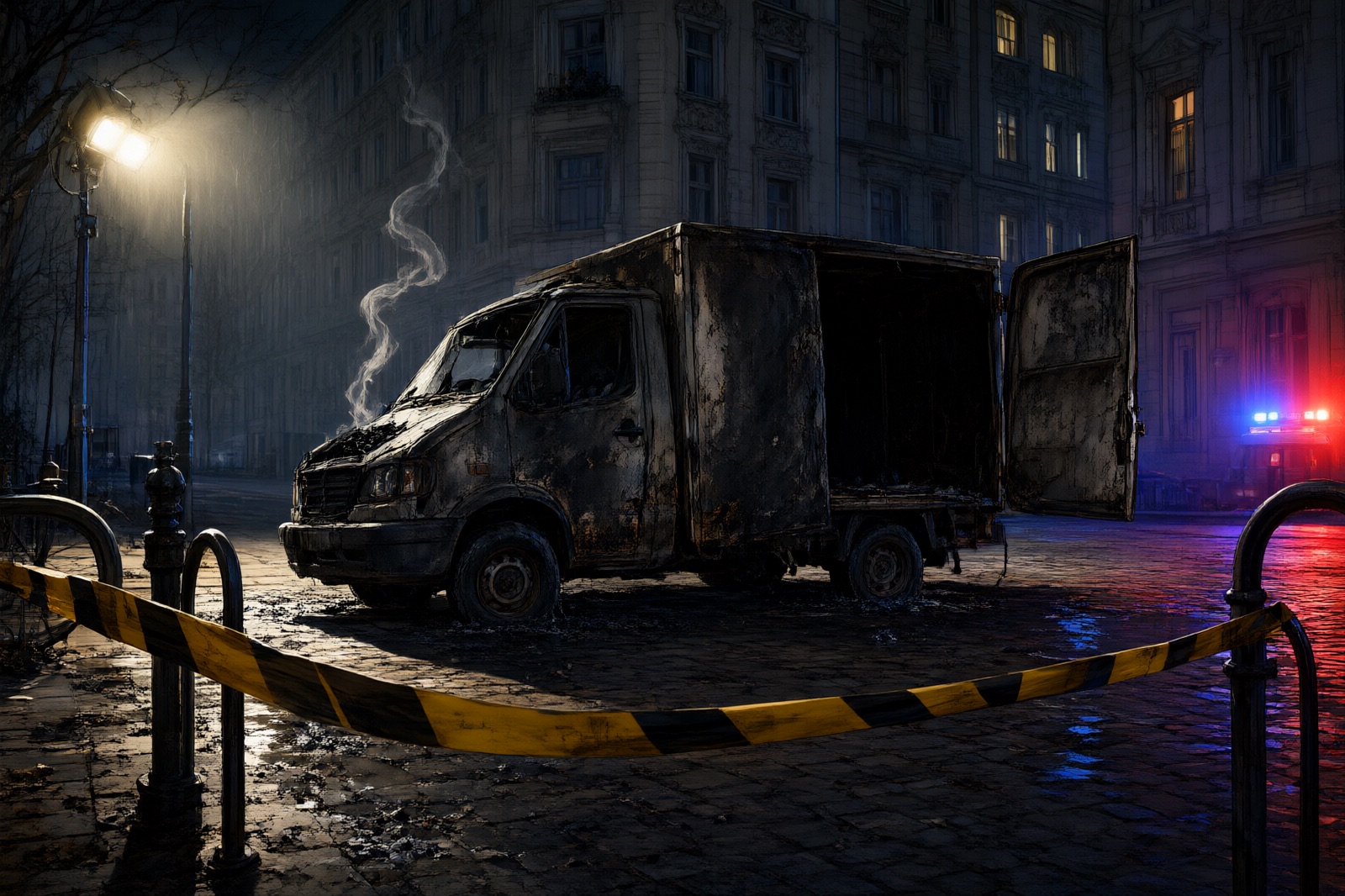
At seven a five-series BMW burned on the car park behind a shisha bar in Sonnenallee. Light fire, no serious damage. The motor burned like you burn a motor that’s only evidence now.
“They burned the motor, didn’t repair it,” said Leni. “They know we’ve got the plate. They’re reckoning with us. Not with him.”
At eight she sat at her desk, a phone in a bag in front of her.
On the phone: three photos of the Goldregen terrace, taken the day before the job, with a red circle round where a waiter stands. Then a PDF with cover sheet: Gastronomy Care Concept, Level 2. And a message starting with the words: Final Reminder.
“Night porter,” said Kalle over her shoulder.
“In the waiter’s statement. In the message. And the message is from 16th October.”
“The ring man wasn’t there then.”
“No. First there was just the folder.” Leni leaned back. “This ain’t a protection money case, Kalle. This is an invoicing office with a violence department. Three levels. One: peace, fourteen hundred a month. Two: staff on site, twenty-four hundred. Three —” she tapped the paper — “conflict management. Two to four weeks after level two.”
“So my waiter’s a subscription.”
“Your waiter’s a subscription. And someone at theirs lost a phone with the manual on it.”
Half ten, Room 412, Criminal Director Brandt.
“Rieger. Weber.” She adjusted the glasses she never properly needs. “I’ve got forty minutes and a call from the Senate Admin where the word nightlife don’t appear. So: what have you got?”
Leni expected Kalle to talk. But Kalle stood there with hands on his jacket looking like someone waiting for a parking space.
So Leni did it. “Three jobs, one explanation. Marchetti Gastro & Service, Sonnenallee, Danylo Marchenko. Protection money for gastronomy, at least four objects in three districts. The folder, the contract, the night porter. We’ve got a phone from the getaway motor with care concept, terrace photos and a warning. We’ve got two blokes in the motor, one with a GBH prior. And the motor with the kick marks is in Sonnenallee, burned out. Two nicked.”
Brandt looked at her watch, and her watch was the next appointment. “Two PM I want the folder. And Rieger, if the case is complicated because you only show me a suspect when you’ve got him, say so now.”
Kalle picked up his jacket. “The case is complicated.”
“Good.” She wrote something. “What was the bloke in the corner shop called?”
“Kowalski,” said Leni.
Brandt nodded without looking up. “Know him. He did security for a mate in 2019. And he didn’t sell bullets then either, that’s the thing about him that keeps me awake.” She pushed her glasses up. “And the weapon?”
“The traces match a weapon from the gun cabinet of Kowalski Security,” said Leni. “2023 decommissioned, 2024 sold.”
Brandt looked at Kalle. “Then the bloke sold you a half-truth for a currywurst.”
“Yeah,” said Kalle.
“To the corner shop?” asked Leni.
“To the corner shop.”
“Kalle, we’ve got four hours.”
“I know what we’ve got. But there’s something in that shop for me. Jurek’s already not looked at the till twice.”
There was something for him. On the counter stood a paper plate with two currywursts, cold, with skins, no bread. Next to it a beer mat. On the beer mat, in block capitals, like on a delivery note:
The second half costs more. M.K.
Kalle looked at the mat.
“And?” asked Leni.
He took a currywurst. “Cold currywurst’s a statement too,” he said. “And the bloke calculates. He calculates all the time. Now’s the time he miscalculates.”
At the end of the Hofwiesen someone walked in the drizzle, no umbrella, in a black coat, uphill towards Hardenbergstraße. Small, quick steps. Kalle watched him. Leni too.
“What a day,” said Kalle. “And he ain’t even started yet.”
Note: All persons, places and events in this story are fictional. It is inspired by a public police report but does not depict real events, persons or living conditions. Further notes: Legal Notice.